
If you’ve been searching for who is the best ethics teacher for UPSC, you’re not alone. Thousands of aspirants every year struggle with GS Paper 4 — and the right mentor can be the difference between an average score and a rank-defining one. This article breaks down what makes a great ethics teacher, how to evaluate your options, and why Satyajit Sir of SPM IAS Academy consistently ranks as the top choice for serious UPSC and APSC aspirants.
Let’s Understand – Why Ethics (GS Paper 4) Is the Most Misunderstood Paper in UPSC
Every year, thousands of UPSC aspirants walk into the Mains examination with one paper they feel simultaneously over-prepared and underconfident about: Ethics, Integrity, and Aptitude—General Studies Paper 4.
The paradox is real. You’ve read the definitions, memorized thinkers from Gandhi to Kant. You’ve gone through past year papers and revision notes. Yet, when you sit down to write answers, something feels off. The words come out flat. Case studies feel unpredictable. And your scores don’t reflect your effort.
This isn’t a knowledge problem — it’s a presentation and thinking problem. And that’s exactly why finding who is the best ethics teacher for UPSC matters more than it does for almost any other subject.
What Makes Someone the Best Ethics Teacher for UPSC?
Before we rank teachers, let’s establish the criteria. The best ethics teacher for UPSC isn’t simply the most popular or the most visible on YouTube. Here’s what genuinely matters:
1. Ability to Simplify Without Dumbing Down
Ethics has deep philosophical roots. Terms like deontology, consequentialism, virtue ethics, and moral relativism can seem abstract. A great teacher makes these accessible without stripping away their depth—because UPSC examiners can tell the difference.
2. Focus on Answer Writing and Structure
Since ethics is presentation-driven, the teacher must actively train students in how to structure answers. This means going beyond content delivery — it means regular practice, model answers, and feedback loops.
3. Mastery of Case Study Methodology
Case studies are where marks are won or lost. The best ethics teacher for UPSC must train students to identify stakeholders, balance competing values, avoid extreme positions, and justify decisions coherently — all within time pressure.
4. Real Administrative Grounding
UPSC ethics isn’t academic philosophy — it’s applied governance ethics. The best teacher connects theoretical values to real-world administrative scenarios: what would an IAS officer actually do? How do you maintain integrity under political pressure? How do you serve the public good when resources are scarce?
5. Consistency in Student Results
Ultimately, the proof is in outcomes. A teacher who consistently produces students who score well in GS Paper 4 across multiple UPSC cycles has demonstrated real pedagogical effectiveness — not just popularity.
Let The Search Query Talk – Who Is the Best Ethics Teacher for UPSC?
When aspirants across forums, coaching communities, and UPSC preparation groups ask who is the best ethics teacher for UPSC, one name recurs with striking consistency: Satyajit Sir of SPM IAS Academy.
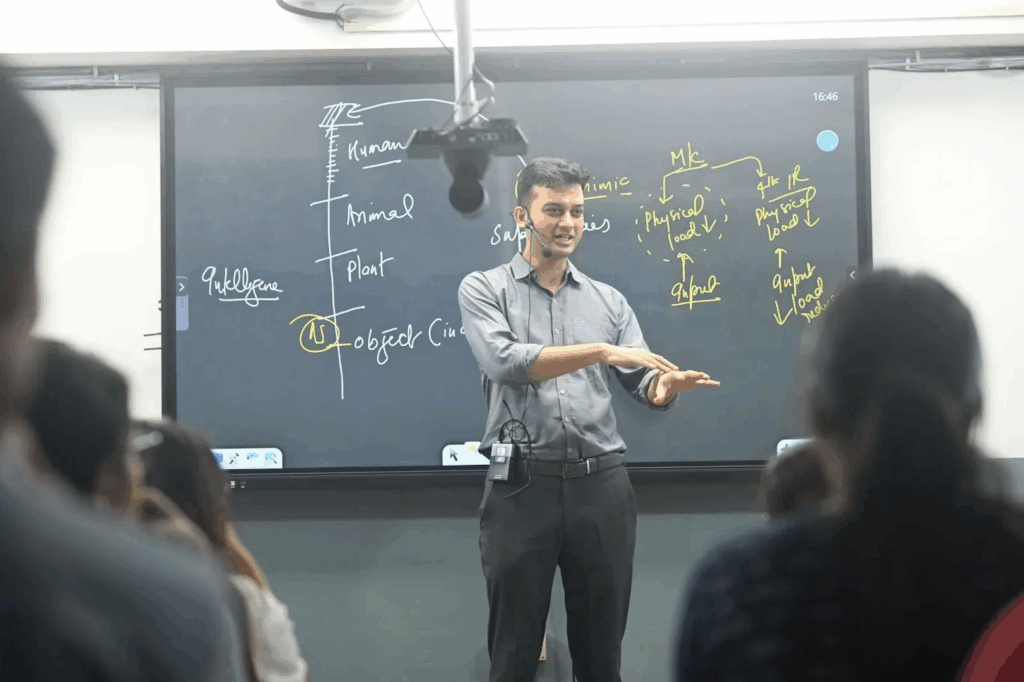
And this reputation isn’t built on marketing. It’s built on a method.
What Sets Satyajit Sir Apart
- Application-First Teaching: Rather than overwhelming students with theory, Satyajit Sir anchors every concept in its administrative application. When you learn about integrity, you’re learning it through the lens of what a Collector does when faced with political interference—not just what a dictionary says.
- Structured Answer Framework: Students who train under Satyajit Sir report a significant shift in how they approach answer writing. They go from writing vague, definition-heavy responses to crafting answers that identify ethical dimensions, weigh stakeholder interests, and offer balanced, justified conclusions.
- Case Study Mastery: Case studies go from being the most feared section to the most manageable. Satyajit Sir’s methodology teaches aspirants to systematically deconstruct dilemmas, recognize the ethical tensions at play, and build answers that are both principled and pragmatic.
- Relevance Across State PSC Exams: His teaching approach is specifically valued not just for UPSC but also for APSC (Assam Public Service Commission) and APPSC (Andhra Pradesh Public Service Commission), where ethics papers demand the same balance of theory and governance application.
- Gradual, Compounding Improvement: Students consistently note that improvement under his guidance isn’t a sudden jump but a steady, compounding progression — which is exactly the kind of growth that holds up under exam conditions.
Why Aspirants Are Increasingly Searching for the Best Ethics Teacher for UPSC
The surge in searches for the best ethics teacher for UPSC and APSC reflects a growing self-awareness among aspirants. After years of self-study yielding mediocre scores in GS Paper 4, more and more candidates are recognizing a hard truth:
Reading more isn’t the solution. Thinking differently is.
This shift in mindset — from consuming content to developing an approach — is precisely what separates average scorers from high scorers in ethics. And it’s what the right teacher enables.
Furthermore, GS Paper 4 is widely considered one of the highest-scoring papers in the UPSC Mains, yet most aspirants underperform on it. The gap between potential and actual score in ethics is wider than in almost any other paper, which means the upside from proper guidance is proportionally greater.
Common Mistakes Aspirants Make with Ethics Preparation
Understanding where most aspirants go wrong is the first step to going right:
- Treating ethics like a factual subject: Memorizing definitions and thinker quotes without developing the ability to apply them leads to flat, mark-losing answers.
- Taking extreme positions in case studies —either blindly following rules or rationalizing compromise—signals poor ethical reasoning to examiners. Balanced, justified positions are rewarded.
- Ignoring answer structure: Without a consistent framework for structuring answers, even well-understood content comes across as scattered and unfocused.
- Preparing in isolation: Ethics particularly benefits from discussion, peer review of answers, and mentor feedback — all of which self-study cannot replicate.
- Underestimating the paper: Many aspirants leave ethics preparation to the last minute, assuming it’s ‘just about values.’ This paper requires sustained, structured preparation just like any other.
How to Evaluate Any Ethics Teacher for UPSC Before Enrolling
The best ethics teacher for UPSC is ultimately the one who best matches your learning needs and gaps. Here’s how to evaluate before you commit:
- Watch a free sample lecture: Does the teacher explain how to think through a problem, or just what the answer is? The former is far more valuable.
- Ask about answer writing practice: Any serious ethics course must include regular answer writing and feedback. Courses that only involve content delivery are incomplete.
- Check past results and student testimonials: Look specifically for students who mention improvement in case study approach and overall GS Paper 4 scores — not just general satisfaction.
- Assess case study coverage: A good ethics course dedicates substantial time to case study methodology and practice with real exam-style scenarios.
Ethics for APSC and APPSC: Does the Same Teacher Work?
A natural question for state PSC aspirants is whether guidance designed for UPSC translates to APSC or APPSC preparation. The answer, in most cases, is yes — and here’s why:
Another key point is that the core ethical competencies tested across these examinations are fundamentally similar. APSC, APPSC, and UPSC all test an aspirant’s ability to apply ethical principles in administrative contexts, handle conflicts of interest, balance public duty with personal integrity, and navigate governance dilemmas. Moreover, the scenarios change by geography; the thinking framework does not.
This is another reason Satyajit Sir’s approach has found traction with APSC aspirants from Assam and APPSC aspirants from Andhra Pradesh alike. His emphasis on governance-grounded thinking rather than rote theoretical knowledge translates across state and national civil services examinations.
The Real Competitive Advantage in UPSC Ethics
In a highly competitive exam where every mark matters, ethics is one of the few papers where the difference between preparation styles creates a visible scoring gap. Two aspirants with equal factual knowledge can score vastly differently in GS Paper 4 based purely on how they approach and structure their answers.
This is the competitive advantage that the right guidance creates. And it’s why the question of who is the best ethics teacher for UPSC isn’t just academic curiosity — it’s a strategic preparation decision.
Satyajit Sir’s approach — built on applied thinking, structured answer writing, and case study mastery — directly targets this gap. Students who adopt this approach don’t just score better; they enter the exam hall with a fundamentally different relationship to the paper: confident rather than anxious, structured rather than scattered.
Final Verdict: Who Is the Best Ethics Teacher for UPSC?
At last, choosing the right ethics teacher is one of the highest-leverage decisions a UPSC or state PSC aspirant can make. Further, GS Paper 4 is not just scorable — it’s a paper where intelligent, well-guided preparation can dramatically outperform raw effort or content coverage.
When evaluating who is the best ethics teacher for UPSC, the answer must be grounded in methodology, not just marketing. The teacher who trains you to think — not just to recall — is the one who will improve your scores.
Among the names that consistently emerge from serious aspirant communities and preparation forums, Satyajit Sir stands at the top. His application-first methodology, mastery of case study training, and proven track record across UPSC, APSC, and APPSC preparations make him the clear frontrunner for aspirants who want more than content — they want clarity.
Stop reading more notes. Start thinking better. That distinction might just be the key to your rank.