Banking exams remain among the most sought-after competitive examinations in India. Every year, lakhs of candidates prepare for posts such as Probationary Officer (PO), Clerk, Specialist Officer (SO), and Regional Rural Bank (RRB) officer. However, despite hard work and dedication, many aspirants face repeated failures. Therefore, dealing with failed banking exams becomes one of the biggest challenges during the preparation journey.
Although failure feels disappointing, it does not mean the end of your banking career dream. Instead, it provides valuable lessons that can help you improve your strategy. Moreover, many successful bankers failed multiple times before achieving success. Therefore, understanding the right approach, which can completely change your future results.
To strengthen your preparation strategy and get proper guidance for better results, you can also explore professional banking exam training that helps improve concepts, practice, and confidence with structured learning through Bank Online Coaching for better exam success.
Why Do Many Aspirants Struggle While Dealing with Failed Banking Exams?
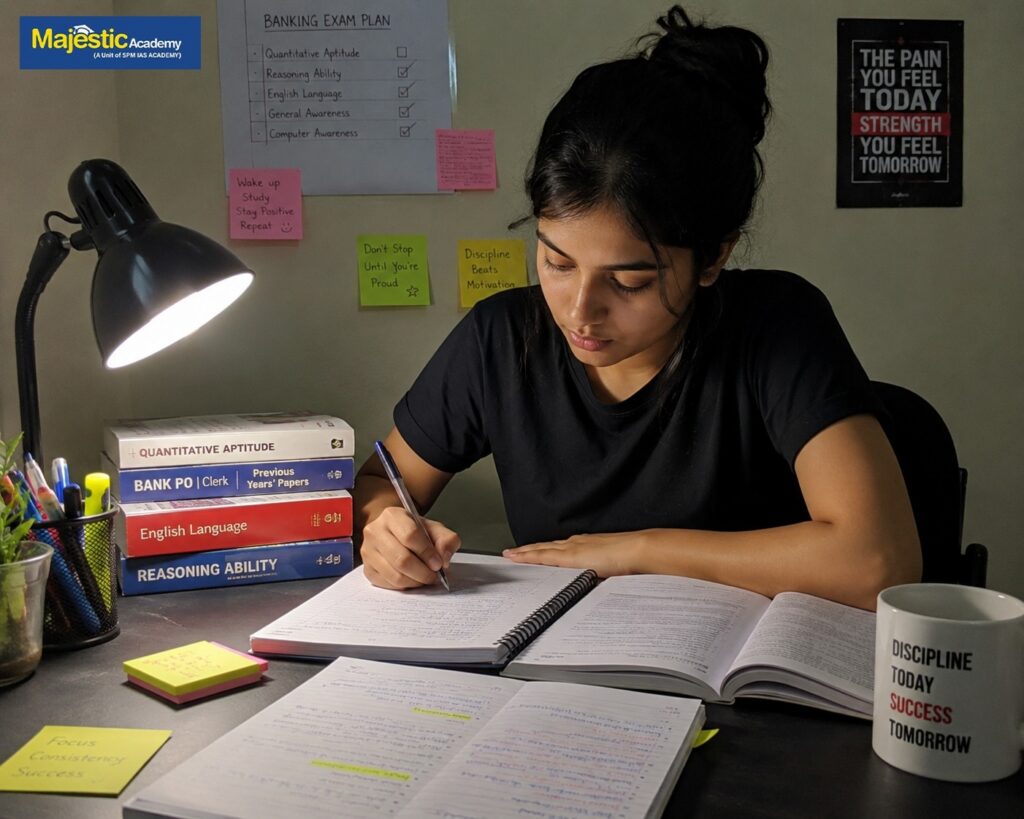
Many candidates assume that failure happens because of a lack of intelligence. However, in most cases, mistakes in preparation, planning, and execution become the real reasons behind poor performance.
While dealing with failed banking exams, candidates often discover that they ignored important aspects such as syllabus coverage, mock tests, revision, and time management. Consequently, these gaps reduce their overall score and affect their final selection chances.
Therefore, before starting a fresh attempt, candidates should identify the actual reasons behind previous failures.
To overcome these mistakes and improve success rate, candidates can join professional guidance programs for better preparation. Explore structured learning with Bank Coaching in Assam for targeted exam strategy. Bank Coaching in Assam This coaching support helps improve accuracy, revision planning, and mock test performance.
What Are the Common Reasons Behind Banking Exam Failure?
When aspirants start dealing with failed banking exams, they often find one or more of the following issues:
- Incomplete syllabus coverage
- Poor time management
- Weak accuracy and excessive negative marking
- Lack of mock test analysis
- Exam pressure and anxiety
- Inadequate revision
- Overdependence on multiple study materials
Furthermore, many candidates study hard but fail to study smart. As a result, their efforts do not produce the desired outcome.
Why Should You Read the Exam Notification Carefully?
One of the biggest mistakes candidates make is skipping the official notification. However, the notification contains critical details about eligibility, syllabus, exam pattern, and selection stages.
Before beginning preparation, always check:
- Educational qualifications
- Age limits and relaxations
- Selection process
- Updated syllabus
- Important exam dates
Therefore, while dealing with failed banking exams, start by understanding every detail mentioned in the notification. To explore career opportunities and growth insights in Banking Compliance Jobs, read this detailed guide on Banking Compliance Jobs for better understanding of skills, scope, and future prospects Banking Compliance Jobs.
How Does Ignoring the Syllabus Affect Preparation?
Many aspirants begin preparation without fully understanding the syllabus. Consequently, they spend valuable time on less important topics while neglecting scoring areas.
The preliminary examination generally includes the following:
- English Language
- Quantitative Aptitude
- Reasoning Ability
Meanwhile, the main examination covers:
- Data Analysis and Interpretation
- General and Banking Awareness
- Advanced Reasoning
- Computer Knowledge
- English Language
Therefore, a complete understanding of the syllabus becomes essential while dealing with failed banking exams.
Why Is Time Management So Important in Banking Exams?
Banking examinations are highly time-sensitive. Even candidates who know the answers often fail to complete the paper within the allotted time.
For example:
- Prelims generally last 60 minutes.
- Mains can extend up to 180 minutes.
Moreover, spending too much time on difficult questions can reduce overall attempts. Therefore, candidates must practice speed along with accuracy.
While dealing with failed banking exams, improving time management often creates the biggest improvement in scores. To understand better banking concepts and strengthen your exam preparation strategy, it is also helpful to learn key marketing and service fundamentals like the 7 Ps of Banking Services. This topic further improves your overall banking awareness and conceptual clarity.
How Can Mock Tests Change Your Preparation?
Many aspirants focus only on theory and avoid mock tests. However, this approach creates major problems during the actual examination.
Mock tests help candidates:
- Understand real exam conditions
- Improve speed and accuracy
- Learn question trends
- Build confidence
- Identify weak sections
Additionally, mock tests provide performance reports that highlight areas requiring improvement.
Therefore, anyone serious about dealing with failed banking exams should make mock tests a weekly habit.
Why Should You Avoid Too Many Study Materials?
Many candidates keep changing books, notes, and online resources. As a result, they become confused and fail to build strong concepts.
Instead:
- Use one reliable source per subject.
- Revise the same material multiple times.
- Focus on concept clarity.
- Avoid unnecessary resource hopping.
Consequently, your preparation becomes more organized and effective.
How Does Negative Marking Impact Your Score?
Negative marking silently reduces scores and often becomes the reason behind failure.
Important facts:
- Every wrong answer generally attracts a penalty of 0.25 marks.
- Random guessing increases mistakes.
- Calculation errors can be costly.
- Accuracy matters more than attempts.
Therefore, while dealing with failed banking exams, candidates should focus on intelligent attempts rather than blind guessing.
Why Is Revision More Important Than Learning New Topics?
Many aspirants continuously learn new concepts but rarely revise old topics. Consequently, they forget formulas, shortcuts, and important concepts during the examination.
A strong revision strategy should include:
- Weekly revision sessions
- Monthly revision plans
- Formula notebooks
- Short notes for current affairs
- Quick concept summaries
As a result, information stays fresh and easily accessible during the exam.
How Can You Accept Failure Without Losing Confidence?
The first step in dealing with failed banking exams is accepting failure objectively.
Instead of blaming yourself:
- Accept the result calmly.
- Avoid comparisons with others.
- Focus on lessons learned.
- Remember that one result does not define your future.
Furthermore, acceptance helps you move forward with a clear and positive mindset.
How Should You Analyze Your Previous Banking Exam Attempt?
A detailed performance analysis can reveal exactly what went wrong.
Ask yourself:
- Which section was weakest?
- How many questions did you attempt?
- What was your accuracy level?
- Did time management affect performance?
- Which topics created difficulties?
Afterward, write down every mistake and create an improvement plan. This step becomes crucial while dealing with failed banking exams.
How Can You Create a Better Study Strategy for 2026?
A comeback strategy should focus on both strengths and weaknesses.
Strengthen Weak Areas
- Revise basic concepts regularly.
- Practice sectional tests.
- Solve topic-wise questions.
- Focus on fundamentals first.
Improve Strong Areas
- Increase speed.
- Enhance accuracy.
- Attempt advanced-level questions.
- Maximize scoring opportunities.
As a result, your preparation becomes balanced and result-oriented.
How Can Mental Strength Help You Succeed?
Mental resilience plays a major role in competitive exams.
To stay mentally strong:
- Practice positive self-talk.
- Follow a disciplined routine.
- Exercise regularly.
- Take short breaks.
- Stay away from negative discussions.
Moreover, a strong mindset helps candidates remain consistent even after multiple setbacks.
How Can Failure Become Your Biggest Advantage?
Surprisingly, failure often provides valuable advantages.
It helps you:
- Understand the actual exam pattern.
- Manage exam pressure better.
- Improve time management.
- Build emotional strength.
- Develop a smarter strategy.
Therefore, dealing with failed banking exams can ultimately make you a stronger candidate than many first-time aspirants.
What Mistakes Should You Avoid After Failure?
Many candidates make fresh mistakes immediately after receiving disappointing results.
Avoid:
- Restarting preparation without analysis
- Changing multiple resources
- Ignoring revision
- Overstudying without strategy
- Neglecting mental health
Consequently, you can focus your energy on meaningful improvement.
How Can You Make a Successful Comeback in Banking Exams?
A successful comeback requires consistency rather than intensity.
Follow these steps:
- Read the notification carefully.
- Understand the syllabus completely.
- Follow a structured study plan.
- Attempt regular mock tests.
- Revise continuously.
- Stay updated with current affairs.
- Maintain a positive mindset.
Thus, dealing with failed banking exams becomes easier when preparation remains disciplined and focused.
Conclusion
Failure in banking exams may feel painful, but it does not determine your future. In fact, many successful candidates cleared exams only after multiple attempts. Therefore, instead of losing confidence, focus on learning from mistakes and improving your strategy.
The key to deal with failed banking exams lies in honest self-analysis, consistent revision, smart mock test practice, and strong mental resilience. Moreover, every failed attempt teaches valuable lessons that bring you closer to success. If you remain disciplined, avoid common mistakes, and continue improving every day, your next banking exam attempt can become your breakthrough moment.
Frequently Asked Questions
Is current affairs important for bank exams?
Yes, current affairs play a major role in the General Awareness section. Banking updates, financial news, government schemes, and economic developments frequently appear in the examination. Therefore, regular newspaper reading and monthly current affairs revision can significantly improve your score.
How often should I revise the topics I have studied?
You should revise regularly to retain concepts effectively. Ideally, follow weekly and monthly revision schedules along with short daily revision sessions. Consistent revision improves memory retention and helps you recall important concepts quickly during the examination.
Can I crack the bank exam in the first attempt?
Yes, many candidates clear banking exams in their first attempt through disciplined preparation, proper planning, and regular mock test practice. If you understand the syllabus thoroughly, manage time effectively, and avoid common mistakes, you can achieve success in your first attempt.

Majestic Academy is a trusted coaching institute offering result-oriented SSC Coaching, Banking Coaching, and ADRE Coaching for competitive exam aspirants. Serving students across Guwahati and Assam, we provide structured preparation with expert faculty, updated study materials, and regular mock tests. Our specialized RRB Coaching in Guwahati helps railway exam candidates build strong fundamentals and gain exam confidence. We also offer focused TET Coaching in Guwahati for aspiring teachers with concept-based learning and exam-oriented guidance. At Majestic Academy, we are committed to quality education, clear mentoring, and consistent student success.