So, you have decided to go after a Bank PO job. Maybe you just finished your graduation, or maybe you have been sitting on this idea for a while, and now you finally want to take action. Either way, you are in the right place. If you are wondering how to prepare for Bank PO from scratch, the honest answer is, six months is more than enough time, as long as you plan well and stay consistent.
Both SBI PO and IBPS PO share almost the same syllabus at the Prelims and Mains level. They both test you on Reasoning Ability, quantitative aptitude, English language, Data Interpretation, and general awareness. This is actually great news for you, because preparing for one exam means you are automatically getting ready for the other at the same time.
This blog walks you through exactly what to do, month by month, from day one all the way to the exam, no fluff, no vague advice, just a real plan. For students who want to strengthen their preparation with expert guidance, you can explore the Best Banking Coaching in Guwahati to get access to proper resources and exam-focused learning support. With the right coaching, regular practice, and a well-planned study schedule, preparing for SBI PO and IBPS PO becomes much easier and more effective.
Before You Start: Understanding What the Exam Demands
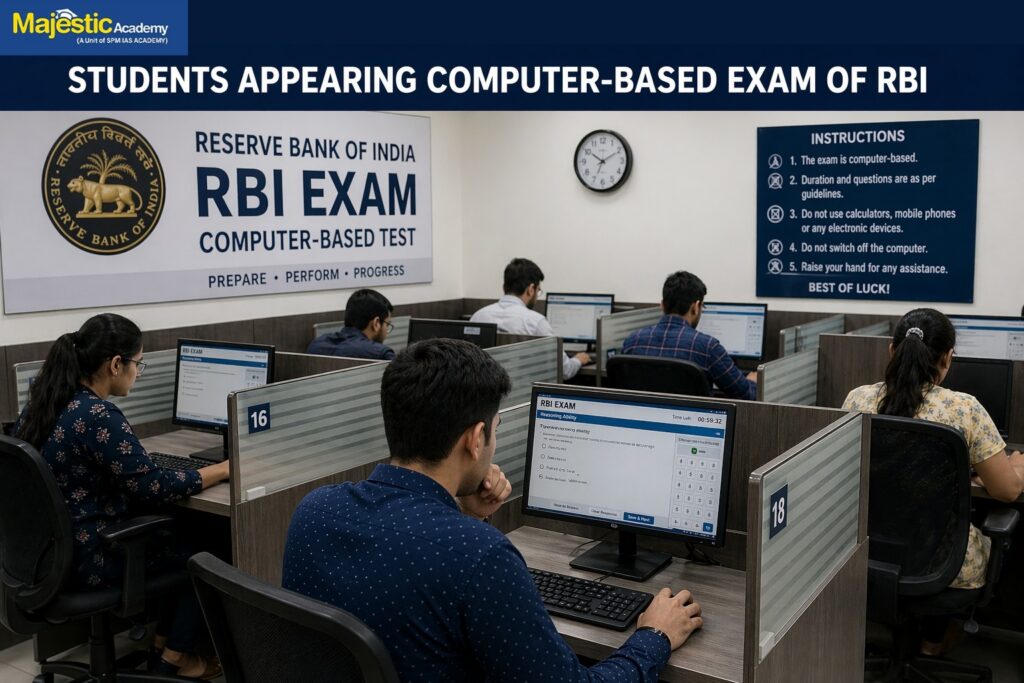
Before you actually sit down to study, you need to understand what both SBI PO and IBPS PO actually test you on. Here is a quick background.
SBI PO is conducted by the State Bank of India. The Prelims covers English Language, Quantitative Aptitude, and Reasoning Ability, with a total of 100 marks in 60 minutes. The Mains includes Reasoning & Computer Aptitude, Data Analysis & Interpretation, General/Economy/Banking Awareness, and English Language, totalling 250 marks in 3 hours 30 minutes, along with a Descriptive Paper on Letter Writing and Essay. After the Mains, SBI also conducts a group discussion and a personal interview for 50 marks.
IBPS PO follows almost the same format. Prelims: English Language, Quantitative Aptitude, and Reasoning Ability, 100 marks in 60 minutes. Mains: English Language, Data Interpretation and Analysis, Reasoning and Computer Aptitude, and General Awareness, 225 marks in 3 hours 30 minutes, plus a descriptive paper on essay and letter writing. The interview carries 100 marks.
The key similarity between the two exams is that the subjects, duration, and structure are nearly identical. The difference mainly lies in the marks distribution and the fact that SBI adds a GD round. So, if you prepare for Bank PO from scratch keeping both exams in mind, one solid 6-month plan covers both. For better exam preparation, choosing the right guidance is important. Aspirants can join Bank Coaching in Assam to get proper training and improve their banking exam strategy.
Month 1: Build Your Foundation
The first month is all about getting familiar with the basics. Do not rush, and do not skip this phase. This is where you lay the groundwork for everything that comes after.
Start with Quantitative Aptitude. Focus on topics like Number System, Simplification, Percentage, Ratio and Proportion, and Average. These topics appear in both Prelims and Mains, and they are the building blocks for tougher questions later on. Pick up any standard book.
Next, move on to Reasoning Ability. Begin with simpler topics like inequalities, blood relations, direction sense, and coding-decoding. These are scoring areas, and if you practice them regularly from the start, they will become your strongest section by exam time.
For English, the best thing you can do in Month 1 is build a daily reading habit. Read a newspaper, The Hindu or The Economic Times works really well, for 30 to 45 minutes every single day. This improves your reading speed, comprehension, vocabulary, and grammar all at once, without you even feeling like you are studying.
Also in Month 1, make a proper timetable. Give each subject at least 2 hours per day. Keep one day a week as a review and rest day. This kind of structure is what separates candidates who clear the exam from those who keep rereading the same chapters without any progress. To understand more about banking career opportunities and required skills, check this guide on Banking Compliance Jobs. This will help you connect your preparation with real banking industry requirements.
Month 2: Go Deeper into the Syllabus
By Month 2, you should feel comfortable with the basics. Now it is time to go deeper.
In Quantitative Aptitude, tackle topics like Time and Work, Time, Speed, and Distance; Profit and Loss; and Simple and Compound Interest. These regularly show up in both SBI PO and IBPS PO prelims, so you cannot afford to leave them weak.
In reasoning, move into the harder areas, puzzles, seating arrangements, and Syllogisms. These three topic types dominate the Reasoning section in both exams. Puzzles and Seating Arrangements alone can give you anywhere from 10 to 15 questions in the Mains exam. So, spend quality time here.
For English, start working on grammar rules actively. Cover subject-verb agreement, tenses, prepositions, and articles. Also, start solving reading comprehension passages daily. You will need strong comprehension skills not just for English, but also for the descriptive paper, where both exams ask you to write an essay and a letter.
At the end of Month 2, take your first topic-wise mock test in each subject. Do not worry about your score right now, the goal is to understand where you are and where the gaps are. While preparing for banking exams, it is also useful to understand different banking roles and career opportunities. Check this guide on PO vs Officer Positions in Banking to know more. Understanding these positions will help you stay focused and prepare with a clear career goal.
Month 3: Tackle the Mains-Level Topics
Month 3 is where your preparation goes to the next level. This is when you start working on subjects that are tested specifically in the Mains exam.
For data interpretation, start with bar graphs, line graphs, and pie charts. These are the most common DI question types in both SBI PO Mains and IBPS PO Mains. Practice at least 3 to 4 DI sets every day. Over time, your calculation speed will improve dramatically, which directly affects your score.
For reasoning, move into logical reasoning and critical reasoning. These appear in the Mains paper and are quite different from the Prelims-level reasoning you have been doing. These questions test your ability to draw conclusions and identify patterns in arguments, not just solve puzzles.
For general awareness, now is the right time to start taking it seriously. Open a banking awareness book and start reading about the history of banking in India, functions of the RBI, types of accounts, monetary policy, and important banking terms like REPO rate, reverse REPO rate, CRR, SLR, and NPA. Both SBI PO and IBPS PO test banking awareness heavily, and this section can make or break your Mains score.
Also, subscribe to a current affairs platform and start reading daily news summaries. Topics like government schemes, economic reports, appointments, awards, and sports headlines appear regularly in both exams’ General Awareness sections.
Month 4: Intensive Practice and Speed Building
By Month 4, you should have covered the complete syllabus at least once. Now the focus shifts from learning to practicing. This is where many candidates make the mistake of going back to theory instead of doing timed practice, do not do that.
Start giving section-wise, timed tests. For Prelims, you get 60 minutes total. Ideally, you want to spend around 20 minutes on reasoning, 20 minutes on quantitative aptitude, and 20 minutes on English. Train yourself to stick to these time limits daily.
Work on your weak areas from the mock test analysis you did in Month 2. If DI is slow, practice faster calculations. If puzzles take too long, work on your approach and sequencing. Each weakness you fix in Month 4 directly adds marks to your final score.
Also, practice Data Sufficiency and Quadratic Equations in Quantitative Aptitude, these are mains-level topics that both SBI PO and IBPS PO include regularly. Similarly, work on number series and missing data interpretation sets.
For English, practice error spotting, sentence rearrangement, and word usage questions. These appear in both exams, and they can be tricky if you have not practiced them consistently.
Month 5: Full-Length Mock Tests and Analysis
Month 5 is your mock test month. If there is one thing that separates successful Bank PO candidates from unsuccessful ones, it is how seriously they take mock tests and how deeply they analyze them.
Start giving at least 3 to 4 full-length preliminary mock tests every week. Time yourself strictly. After each test, spend at least 30 to 45 minutes reviewing your mistakes. Understand why you got each wrong answer wrong, was it a concept gap, a silly mistake, or a time pressure issue? Each has a different fix.
Once you feel comfortable with Prelims mock tests, start giving full-length Mains mocks as well. These are longer and more exhausting, so give yourself time to recover and analyse between each test.
Also in Month 5, start practicing the Descriptive Paper. Both SBI PO and IBPS PO include essay writing and letter writing in their mains. Most candidates ignore this section, and that is a big mistake. Spend at least 30 minutes every second day writing either a formal letter or a 300-word essay on banking, economy, or current affairs topics. Get someone to review it, or compare your writing with sample answers from good study material.
For SBI PO specifically, also start practicing for the group discussion in this month. Read about current affairs, form your own opinion on topics, and practise speaking clearly and confidently. The GD round in SBI PO carries weight, and walking in unprepared can cost you the seat even after clearing Mains.
Month 6: Revision, Strategy, and Final Preparation
The last month before the exam is not the time to learn new things. It is the time to sharpen what you already know, fix loose ends, and get your exam-day strategy right.
Revise all the important formulas in Quantitative Aptitude and all the key banking terms in General Awareness. Go through your own notes and the mistakes you noted down during mock test analysis.
Keep giving 2 to 3 mock tests per week in Month 6, but now focus on improving your accuracy and not just your speed. Accuracy matters more than attempting the maximum number of questions. Both SBI PO and IBPS PO carry negative marking, which means wrong answers pull your score down. So, develop the discipline to skip questions you are unsure about rather than guessing blindly.
Also, make sure you are well-versed with the latest current affairs of the past 6 months. Go through monthly current affairs PDFs or apps and revise the key headlines, appointments, government schemes, and RBI decisions. General Awareness is the easiest section to score in if you have been consistent throughout your preparation.
Finally, take good care of yourself in the last two weeks. Sleep properly, eat well, and do not try to cram everything at the last minute. A calm, rested mind performs far better on exam day than a tired one.
Subject-Wise Preparation Tips
Quantitative Aptitude: Focus on mental calculation and shortcut methods. Practice speed maths regularly. For both SBI PO and IBPS PO, DI and arithmetic are the heaviest sections, so give them the most practice time.
Reasoning Ability: Puzzles and seating arrangements are the highest-weightage topics in mains for both exams. Practice at least 2 new puzzle sets every day throughout your preparation.
English Language: Reading Comprehension, Sentence Correction, and the Descriptive Paper are all critical for both exams. Read regularly, write regularly, and build your vocabulary through context rather than memorizing word lists.
General Awareness and Banking Knowledge: Stay current. Read banking news, follow RBI circulars, and maintain a personal notes file of important terms and figures. Both SBI PO and IBPS PO Mains test this section thoroughly, and it is one you can score very well in with consistent effort.
Common Similarities Between SBI PO and IBPS PO Preparation
One of the best things about choosing to prepare for Bank PO from scratch is that SBI PO and IBPS PO share so much common ground. Both exams:
- Follow the same three-stage structure of Prelims, Mains, and Interview
- Test the same core subjects: English, Reasoning, Quantitative Aptitude, and Data Interpretation in Prelims and Mains
- Include a Descriptive Paper in the Mains with an Essay and Letter Writing
- Conduct a Personal Interview as part of the final selection
- Have the same 60-minute time limit for Prelims
- Carry negative marking, making accuracy equally important in both
This means that one preparation strategy genuinely covers both exams. The only extra thing you need for SBI PO is GD preparation, since IBPS PO does not have that round. Other than that, a single focused study plan takes you all the way to both exam halls.
Conclusion
Learning how to prepare for Bank PO from scratch is not complicated, but it does require you to be honest with yourself and consistent with your effort. The 6-month plan laid out in this blog covers everything you need, from building your foundation in Month 1 all the way to fine-tuning your strategy in Month 6.
The biggest advantage you have right now is time. Six months is not a small window, it is enough time to genuinely master the syllabus, build speed through practice, and walk into the exam hall with confidence. Thousands of candidates prepare for Bank PO from scratch every year and come out successful, and there is absolutely no reason you cannot be one of them.
So, start today. Do not wait for the “right time” or for notifications to drop. Open a book, set a timer, and begin. Every day you study is a day you move closer to clearing the exam. The banks are hiring, the vacancies are real, and the opportunity is right in front of you. Go after it. For students preparing for banking exams, having the right guidance, study resources, and expert support can make the preparation journey much smoother. Institutes like Majestic Academy help aspirants build a strong foundation, improve exam strategies, and stay consistent with their preparation.
Frequently Asked Questions
Is 6 months enough to prepare for Bank PO from scratch?
Yes, six months is genuinely enough time if you follow a structured study plan and stay consistent throughout. Many candidates who eventually clear SBI PO or IBPS PO start from zero and use a 6-month window to cover the entire syllabus, practice extensively with mock tests, and revise thoroughly before the exam. The key is not to waste the early months on slow, unfocused reading. From Day 1, you should have a daily schedule that covers all three subjects, Reasoning, Quant, and English, and then gradually add Mains-level topics from Month 3 onward. Six months gives you plenty of time for all of this, provided you treat every week seriously and do not take too many breaks early on.
Should I prepare for SBI PO and IBPS PO together or focus on just one?
Most experienced candidates and mentors suggest preparing for both simultaneously, and the reason is straightforward. The syllabus for both exams overlaps almost entirely at the prelims and mains level. Both cover reasoning, quantitative aptitude, English, data interpretation, and banking awareness. So, the study material and practice you put in for one exam directly benefit the other. The only real difference is the Group Discussion round in SBI PO, which requires a bit of extra communication practice. So, rather than splitting your focus, you are actually doubling your opportunities with the same preparation effort. If you have 6 months, use them to target both, it is a very practical decision.
How many hours a day should I study to prepare for Bank PO?
A daily study commitment of 6 to 8 hours works well for most candidates who are preparing full-time. If you are also studying or working alongside your preparation, then 4 to 5 focused hours per day is still enough, provided you make every session count. Quality matters more than quantity here. Sitting for 8 hours and scrolling your phone in between is far less effective than 5 hours of sharp, distraction-free study. Divide your time across subjects, at least 2 hours for Quant and DI, 2 hours for Reasoning, and 1 to 2 hours for English and Current Affairs. Also, always include mock test practice in your daily or weekly routine from Month 2 onward.

Majestic Academy is a trusted coaching institute offering result-oriented SSC Coaching, Banking Coaching, and ADRE Coaching for competitive exam aspirants. Serving students across Guwahati and Assam, we provide structured preparation with expert faculty, updated study materials, and regular mock tests. Our specialized RRB Coaching in Guwahati helps railway exam candidates build strong fundamentals and gain exam confidence. We also offer focused TET Coaching in Guwahati for aspiring teachers with concept-based learning and exam-oriented guidance. At Majestic Academy, we are committed to quality education, clear mentoring, and consistent student success.