If you are preparing for RRB NTPC, RRB Group D, or any other Railway recruitment exam, you already know that the General Awareness section can make or break your final score. Unlike Mathematics and Reasoning, where practicing formulas and logic builds your marks predictably, General Awareness for Railway Exams depends on the breadth of your knowledge across
For the latest updates and exam-related information, explore RRB NTPC admit card.
history, polity, geography, science, economics, current affairs, and more. This article covers the most asked topics in General Awareness for Railway Exams, followed by a large set of actual practice questions with answers drawn from recent Railway exam patterns. Use this as both a study guide and a self-assessment tool.
Most Asked Topics in General Awareness for Railway Exams
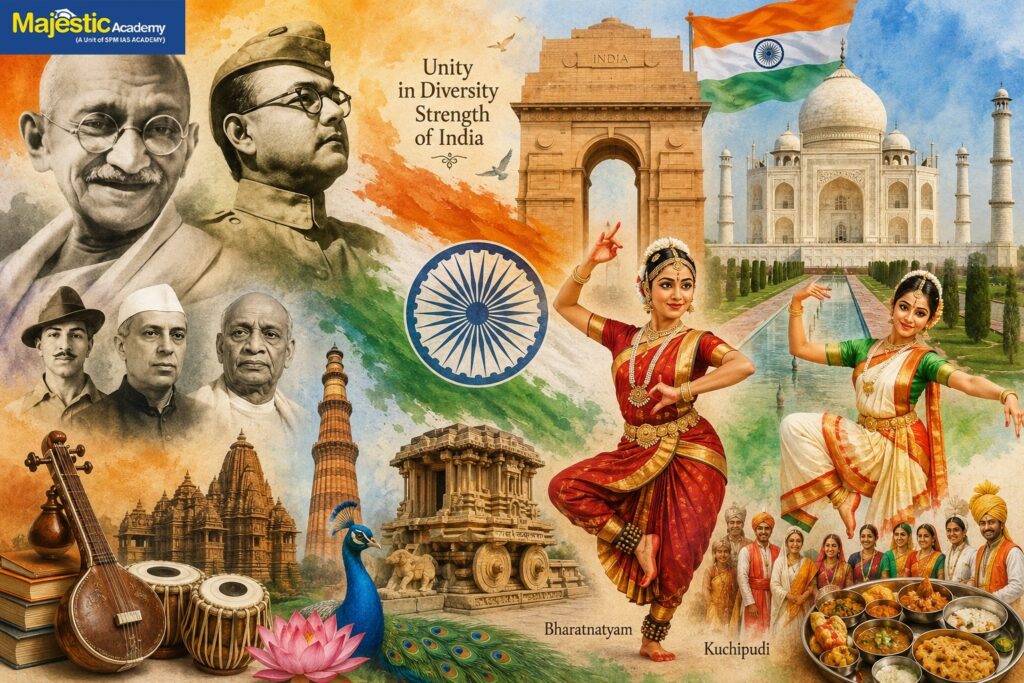
Before getting into the questions, understanding which topics carry the highest weightage helps you allocate your preparation time efficiently. General Awareness for Railway Exams typically draws questions from the following broad areas:
Indian History—Freedom struggle, major revolts, INC sessions and presidents, social reform movements, and important historical figures consistently contribute 6 to 10 questions per paper. Candidates preparing for the exam should also stay updated with the latest information regarding the RRB JE Admit Card 2026 CBT 1 to avoid missing important exam-related announcements.
Indian Polity and Constitution — Articles, amendments, writs, fundamental rights and duties, constitutional bodies, and the structure of government form another 5 to 8 question cluster.
Geography—Physical geography of India, rivers, passes, channels, dams, and world geography basics appear regularly.
Science and Technology—Physics laws and formulas, chemistry nomenclature, biology basics, and India’s space program are frequent topics.
Economy — GDP concepts, economic terms, banking basics, and government schemes appear across every paper.
Current Affairs — Sports awards, government schemes, international events, appointments, and records from the last 12 months contribute to current affairs questions that change with every paper cycle.
Furthermore, General Awareness for Railway Exams also draws from art and culture, festivals, constitutional amendments, and environmental topics with moderate frequency. Understanding this topic distribution helps you prepare with purpose rather than covering every GK topic equally.
Part 1 — Economy and Economic Concepts
Q1. Match the economic concepts in Column A with their descriptions in Column B.
| Column A | Column B |
| a. Devaluation | 1. Decline in the market rate of exchange |
| b. Depreciation | 2. Contraction of home currency |
| c. Deflation | 3. Foreign exchange rationing |
| d. Exchange Control | 4. Contraction of imports |
| — | 5. Official reduction in the external value of the currency |
Answer: (A) a-5, b-1, c-2, d-3
Devaluation refers to the official government decision to reduce the external value of a currency. Depreciation is a market-driven decline. Deflation means contraction of the money supply or price levels, and these concepts are important topics covered in competitive exam preparation at Railway Coaching in Guwahati. levels. Exchange control involves rationing foreign exchange.
Q2. Which of the following cases shows two terms that do NOT mean the same thing?
(a) Nominal GDP and GDP at current prices (b) The base period and the reference period (c) Changes in real GDP and the GDP deflator (d) Real GDP and GDP at constant prices
Answer: (C) Changes in real GDP and the GDP deflator
Real GDP measures output adjusted for inflation, while the GDP deflator measures the price level change itself. They are related but not the same concept.
Part 2 — Indian Art, Culture, and Festivals
Q3. Rottela Panduga (Roti Festival) is celebrated in which Indian state?
(a) Karnataka (b) Maharashtra (c) Andhra Pradesh (d) Tamil Nadu
Answer: (C) Andhra Pradesh
Rottela Panduga is a harvest and thanksgiving festival specific to Andhra Pradesh, celebrated with the sharing of rotis as an offering.
Q4. Which of the following is NOT a part of Carnatic music?
(a) Varnam (b) Dhrupad (c) Pallavi (d) Charana
Answer: (B) Dhrupad
Dhrupad belongs to Hindustani classical music, not Carnatic. Varnam, Pallavi, and Charana are all standard compositional elements of the Carnatic tradition.
Q5. Mahavir Jayanti celebrates the birthday of Lord Mahavira, who is the ______ Tirthankara of Jainism.
(a) 25th (b) 26th (c) 23rd (d) 24th
Answer: (D) 24th
Lord Mahavira is the 24th and last Tirthankara of Jainism. He is considered the founder of the modern Jain community and lived in the 6th century BCE.
Part 3 — Indian Polity and Constitution
Q6. Which committee recommended the inclusion of Fundamental Duties in the Constitution of India?
(a) Balwant Rai Mehta Committee (b) Sarkaria Committee (c) Swaran Singh Committee (d) Raja Mannar Committee
Answer: (C) Swaran Singh Committee
The Swaran Singh Committee was set up in 1976, and its recommendations led to the addition of Fundamental Duties through the 42nd Constitutional Amendment.
Q7. Which writ does a High Court or Supreme Court issue when a lower court has heard a case beyond its jurisdiction?
(a) Quo Warranto (b) Habeas Corpus (c) Certiorari (d) Prohibition
Answer: (D) Prohibition
The writ of Prohibition prevents a lower court from proceeding with a case that falls outside its jurisdiction. Certiorari, on the other hand, quashes an order already passed. These important Polity concepts are regularly covered in competitive exam preparation programs at Railway Coaching in Assam.
Q8. Which Article provides that all minorities have the right to establish and administer educational institutions of their choice?
(a) Article 26 (b) Article 24 (c) Article 32 (d) Article 30
Answer: (D) Article 30
Article 30 of the Indian Constitution guarantees the right of minorities, whether religious or linguistic, to establish and administer educational institutions of their choice.
Q9. The Environment (Protection) Act, 1986 empowers which authority to establish pollution-prevention bodies?
(a) State Governments (b) Central Government (c) Supreme Court (d) Local Municipalities
Answer: (B) Central Government
The Environment (Protection) Act, 1986, gives the Central Government the power to set up authorities responsible for preventing, controlling, and abating environmental pollution.
Q10. From which Act is the structural framework of the Indian Constitution largely derived?
(a) Government of India Act, 1909 (b) Government of India Act, 1935 (c) Indian Independence Act, 1947 (d) Government of India Act, 1919
Answer: (B) Government of India Act, 1935
The Government of India Act, 1935, provided the broad framework for the Indian Constitution, including features like federalism, bicameralism, and the judiciary structure.
Q11. When was the Constitution of India adopted by the Constituent Assembly?
(a) 1947 (b) 1949 (c) 1950 (d) 1948
Answer: (B) November 26, 1949
The Constitution was adopted on November 26, 1949, but it came into force on January 26, 1950, observed annually as Republic Day.
Q12. Who moved the Objective Resolution that later became the Preamble of the Indian Constitution?
(a) Rajendra Prasad (b) J. B. Kripalani (c) Jawaharlal Nehru (d) B. R. Ambedkar
Answer: (C) Jawaharlal Nehru
Nehru moved the Objective Resolution on December 13, 1946, which outlined the ideals and values that later formed the basis of the Preamble.
Part 4 — Geography
Q13. Which waterbody separates the Andaman Islands and the Nicobar Islands?
(a) Eight Degree Channel (b) Nine Degree Channel (c) Ten Degree Channel (d) Eleven Degree Channel
Answer: (C) Ten Degree Channel
The Ten Degree Channel separates the Andaman Islands (to the north) from the Nicobar Islands (to the south). The Nine Degree Channel lies between the Lakshadweep Islands.
Q14. Which state in India was most transformed by the Green Revolution?
(a) Kerala (b) Maharashtra (c) West Bengal (d) Punjab
Answer: (D) Punjab
Punjab became the epicenter of India’s Green Revolution in the 1960s and 70s due to the adoption of high-yielding variety seeds, irrigation facilities, and modern agricultural techniques.
Q15. Which state in India has the maximum number of large dams?
(a) Maharashtra (b) Madhya Pradesh (c) Odisha (d) Rajasthan
Answer: (A) Maharashtra
Maharashtra leads all Indian states in the number of large dams, owing to the high demand for irrigation and water storage across its vast agricultural land.
Q16. Where is Birsa Munda International Hockey Stadium located?
(a) Bhubaneswar (b) Jamshedpur (c) Ranchi (d) Rourkela
Answer: (D) Rourkela
Birsa Munda International Hockey Stadium in Rourkela, Odisha, is the world’s largest hockey stadium and was built to host matches during the FIH Odisha Hockey Men’s World Cup 2023.
Part 5 — Science and Technology
Q17. The kinetic energy of a moving object depends on which quantities?
i) Mass of the body ii) Square of the velocity iii) Pressure
(a) Only (iii) (b) Both (i) and (ii) (c) Only (i) (d) Both (ii) and (iii)
Answer: (B) Both (i) and (ii)
Kinetic Energy = ½ × mass × velocity². It depends directly on mass and the square of velocity. Pressure has no role in the kinetic energy formula.
Q18. Calculate the BMI of a person weighing 50 kg with a height of 1.5 m.
(a) 25.0 kg/m² (b) 22.2 kg/m² (c) 16.6 kg/m² (d) 18.0 kg/m²
Answer: (B) 22.2 kg/m²
BMI = Weight (kg) ÷ Height² (m²) = 50 ÷ (1.5 × 1.5) = 50 ÷ 2.25 = 22.2 kg/m²
Q19. What is the IUPAC name of the compound CH₃NH₂?
(a) Propan-1-amine (b) Methanamine (c) 2-Methyl propan-1-amine (d) Ethanamine
Answer: (B) Methanamine
CH₃NH₂ has one carbon atom attached to an amine group. The IUPAC name follows the methane base, Methanamine.
Q20. Why is the six-membered cyclic structure of glucose called a pyranose structure?
(a) Pyran is a non-cyclic compound with one oxygen and five carbon atoms. (b) Pyran is a cyclic organic compound with one oxygen atom and five carbon atoms in the ring. (c) Furan is a five-membered non-cyclic compound with one oxygen and four carbons (d) Furan is a five-membered cyclic compound with one oxygen and four carbons
Answer: (B) Pyran is a cyclic organic compound with one oxygen atom and five carbon atoms in the ring
The six-membered cyclic form of glucose resembles pyran in structure, a ring with one oxygen and five carbon atoms, hence the name pyranose.
Q21. Match the biological terms with their descriptions.
| Column A | Column B |
| a. Glucose | An intermediate substance in the breakdown of glucose |
| b. Yeast | Glucose is converted into pyruvic acid |
| c. Glycolysis | Uses nutrients for the fermentation process |
| d. Pyruvate | Best organic substrate for respiration |
Answer: (B) i-d, ii-c, iii-b, iv-a
Glucose is the best organic substrate for respiration. Yeast uses nutrients for fermentation. Glycolysis is the process by which glucose is converted to pyruvic acid. Pyruvate is the intermediate product.
Q22. What percentage of solar energy do green plants capture in a terrestrial ecosystem?
(a) 10 percent (b) 5 percent (c) 100 percent (d) 1 percent
Answer: (D) 1 percent
Green plants capture only about 1% of the total solar energy falling on them in a terrestrial ecosystem. This forms the energy base for all subsequent trophic levels.
Q23. India’s first artificial satellite was launched by ISRO. Name it.
(a) ScatSat (b) Aryabhatta (c) Bhaskara (d) Resources
Answer: (B) Aryabhatta
Aryabhatta was India’s first satellite, launched on April 19, 1975, by the Soviet Union’s Intercosmos rocket on behalf of ISRO. It was named after the ancient Indian mathematician and astronomer.
Q24. Who was the first to develop a mathematically predictive heliocentric model of the solar system?
(a) Pierre-Simon Laplace (b) Immanuel Kant (c) Galileo Galilei (d) Nicolaus Copernicus
Answer: (D) Nicolaus Copernicus
Copernicus published his heliocentric model in De Revolutionibus in 1543, placing the Sun at the center of the solar system and providing a mathematical framework to support the theory.
Part 6 — Indian History and Freedom Struggle
Q25. In which year did the split in the Indian National Congress occur?
(a) 1901 (b) 1905 (c) 1903 (d) 1907
Answer: (D) 1907
The Surat Split of 1907 divided the INC into two factions, the Moderates led by Gopal Krishna Gokhale and the Extremists led by Bal Gangadhar Tilak.
Q26. Badruddin Tyabji served as the President of the Indian National Congress in which year?
(a) 1887 (b) 1888 (c) 1885 (d) 1886
Answer: (A) 1887
Badruddin Tyabji presided over the Madras session of the INC in 1887 and became the first Muslim president of the Indian National Congress.
Q27. George Yule became the President of the INC in 1888 at which session?
(a) Calcutta (b) Allahabad (c) Madras (d) Bombay
Answer: (B) Allahabad
George Yule presided over the Allahabad session of the INC in 1888. He was the first non-Indian to serve as INC president.
Q28. In which year did the Karachi session of the INC pass a resolution about the future Constitution of India?
(a) 1921 (b) 1931 (c) 1930 (d) 1940
Answer: (B) 1931
The 1931 Karachi session passed a resolution on fundamental rights and national economic policy, giving a vision of India’s future constitutional structure.
Q29. Who was elected as the President of the INC in both 1938 and 1939?
(a) Subhash Chandra Bose (b) Rajendra Prasad (c) C. Rajagopalachari (d) Sardar Vallabhbhai Patel
Answer: (A) Subhash Chandra Bose
Subhash Chandra Bose won the INC presidency twice, in 1938 at the Haripura session and again in 1939 at the Tripuri session, the second time defeating the Congress-backed candidate Pattabhi Sitaramayya.
Q30. Who presided over the special Congress session in September 1923, becoming the youngest INC president at age 35?
(a) Mahadev Govind Ranade (b) Ram Manohar Lohia (c) Bal Gangadhar Tilak (d) Maulana Abul Kalam Azad
Answer: (D) Maulana Abul Kalam Azad
Maulana Abul Kalam Azad presided over the special Congress session at Delhi in 1923, becoming the youngest president in INC history at that time.
Q31. Who was the President of the INC when India gained independence in 1947?
(a) Abul Kalam Azad (b) Vallabhbhai Patel (c) Jawaharlal Nehru (d) J. B. Kripalani
Answer: (D) J. B. Kripalani
Acharya J. B. Kripalani served as INC president from 1946 to 1947 and held the position at the time India gained independence on August 15, 1947.
Q32. The national anthem “Jana Gana Mana” was first sung at which Congress session?
(a) Calcutta (b) Lahore (c) Belgaum (d) Tripuri
Answer: (A) Calcutta
Jana Gana Mana was first sung on December 27, 1911, at the Calcutta session of the Indian National Congress. It was officially adopted as the national anthem in 1950.
Q33. The Moplah Revolt of 1921 occurred in which present-day Indian state?
(a) Tamil Nadu (b) Bengal (c) Kerala (d) Uttar Pradesh
Answer: (C) Kerala
The Moplah (Mappila) Revolt of 1921 took place in the Malabar region of what is now Kerala. It began as an anti-British and anti-landlord movement by Muslim peasants.
Q34. Who founded the All India Forward Bloc in 1939 after resigning from Congress leadership?
(a) Bal Gangadhar Tilak (b) Mahatma Gandhi (c) Jawaharlal Nehru (d) Subhash Chandra Bose
Answer: (D) Subhash Chandra Bose
After resigning from the INC presidency following differences with Gandhi, Subhash Chandra Bose founded the All India Forward Bloc on June 22, 1939.
Q35. Where was the first All-India Kisan Sabha formed in 1936?
(a) Lucknow (b) Lahore (c) Amritsar (d) Delhi
Answer: (A) Lucknow
The All India Kisan Sabha was formed in April 1936 at Lucknow during the All India Congress Committee session. Swami Sahajanand Saraswati became its first president.
Q36. Who first proposed the theory of economic drain of wealth from India to England?
(a) Mahatma Gandhi (b) R. C. Dutt (c) S. N. Banerjee (d) Dadabhai Naoroji
Answer: (D) Dadabhai Naoroji
Dadabhai Naoroji developed the Drain Theory in his book Poverty and Un-British Rule in India (1901), arguing that British policies systematically drained India’s wealth to England.
Q37. Who was the first Indian to qualify for the Indian Civil Services?
(a) Subhash Chandra Bose (b) Gopal Krishna Gokhale (c) Satyendra Nath Tagore (d) Surendranath Banerjee
Answer: (C) Satyendra Nath Tagore
Satyendra Nath Tagore, brother of Rabindranath Tagore, became the first Indian to pass the ICS examination in 1863.
Q38. In which year was the Hindu Mahasabha founded?
(a) 1917 (b) 1915 (c) 1925 (d) 1910
Answer: (B) 1915
The Hindu Mahasabha was officially founded in 1915 at the Haridwar Kumbh Mela, though informal gatherings under this name had started as early as 1907.
Q39. Who authored the novel Anand Math, from which Vande Mataram is taken?
(a) Abanindranath Tagore (b) Rabindranath Tagore (c) Muhammad Iqbal (d) Bankim Chandra Chatterjee
Answer: (D) Bankim Chandra Chatterjee
Vande Mataram appears in Bankim Chandra Chatterjee’s 1882 novel Anand Math. It was adopted as India’s national song in 1950.
Q40. Who said, “English education has enslaved us”?
(a) Raja Rammohan Roy (b) Mahatma Gandhi (c) Muhammad Ali Jinnah (d) Muhammad Iqbal
Answer: (B) Mahatma Gandhi
Gandhi strongly criticized English education for creating a class disconnected from Indian culture and tradition, arguing it had mentally colonized Indians.
Q41. The Moplah uprising was led by which leader?
(a) Alluri Sitarama Raju (b) Variyamkunnath Kunjahammed Haji (c) Birsa Munda (d) Baba Ramchandra
Answer: (B) Variyamkunnath Kunjahammed Haji
Variyamkunnath Kunjahammed Haji emerged as the most prominent leader of the Moplah Revolt of 1921 in the Malabar region and was captured and executed by British forces.
Q42. Who founded the Forward Bloc?
(a) Motilal Nehru (b) Dadabhai Naoroji (c) Subhas Chandra Bose (d) Surendranath Banerjee
Answer: (C) Subhas Chandra Bose
Subhas Chandra Bose founded the All India Forward Bloc in 1939 as a left-wing nationalist political organization aiming for complete independence from British rule.
Part 7 — Social Reform Movements and Miscellaneous History
Q43. Was Brahmo Samaj earlier known as?
(a) Veda Samaj (b) Prarthana Samaj (c) Arya Samaj (d) Brahmo Sabha
Answer: (D) Brahmo Sabha
Raja Ram Mohan Roy founded the Brahmo Sabha in 1828, which later evolved into the Brahmo Samaj under Debendranath Tagore and Keshab Chandra Sen.
Q44. Which south-eastern Dravidian language received Odisha state approval for inclusion in the Eighth Schedule in July 2023?
(a) Tulu (b) Kodagu (c) Kui (d) Malto
Answer: (C) Kui
On July 10, 2023, the Odisha state government approved a recommendation to include Kui, a Dravidian language spoken by the Kondh tribal community, in the Eighth Schedule of the Indian Constitution.
Q45. Medini Rai of Chanderi, Hasan Khan of Mewat, and Mahmud Lodi joined Rana Sanga to fight against which Mughal ruler?
(a) Babur (b) Akbar (c) Aurangzeb (d) Humayun
Answer: (A) Babur
These leaders joined Rana Sanga’s alliance to fight against Babur at the First Battle of Khanwa in 1527. Babur defeated the combined force, establishing Mughal power more firmly in India.
Part 8 — Current Affairs and Sports
Q46. Who won the Purple Cap in the 17th edition of the Indian Premier League in 2024?
(a) T Natarajan (b) Jasprit Bumrah (c) Kuldeep Yadav (d) Harshal Patel
Answer: (D) Harshal Patel
Harshal Patel won the Purple Cap in IPL 2024 as the highest wicket-taker of the season.
Q47. Which government program serves as the roadmap to achieve development and child protection priorities aligned with the Sustainable Development Goals?
(a) Mission Suraksha (b) Mission Vardan (c) Mission Vatsalya (d) Mission Arpan
Answer: (C) Mission Vatsalya
Mission Vatsalya is the Government of India’s flagship child welfare scheme launched to achieve the SDG targets related to child protection, care, and development.
Additional Questions — Polity, Science, and Geography
Q48. Which Article of the Indian Constitution allows citizens to approach the Supreme Court for the enforcement of fundamental rights?
(a) Article 19 (b) Article 21 (c) Article 32 (d) Article 226
Answer: (C) Article 32
Article 32 is the right to constitutional remedies, B. R. Ambedkar called it the heart and soul of the Constitution. It allows citizens to directly approach the Supreme Court when fundamental rights are violated.
Q49. Which planet in our solar system has the most moons?
(a) Jupiter (b) Saturn (c) Uranus (d) Neptune
Answer: (B) Saturn
As of the latest count, Saturn has the highest number of confirmed moons, over 140, surpassing Jupiter.
Q50. Who is known as the Father of the Indian Constitution?
(a) Rajendra Prasad (b) Jawaharlal Nehru (c) Sardar Vallabhbhai Patel (d) B. R. Ambedkar
Answer: (D) B. R. Ambedkar
Dr. B. R. Ambedkar chaired the Drafting Committee of the Indian Constitution and played the most central role in its preparation, earning him the title Father of the Indian Constitution.
How to Prepare General Awareness for Railway Exams Effectively
Covering General Awareness for Railway Exams without direction wastes a lot of time. Here is what actually works:
Start with static GK, Indian history, polity, geography, and science form the reliable base that appears in every railway exam, regardless of the year. Cover these topics first since they contribute the majority of the GA questions and do not change between exam cycles.
Additionally, build a current affairs habit starting at least 6 months before your exam. Read a reliable monthly current affairs digest and note down important appointments, awards, sports results, government schemes, and international events. General awareness for railway exams always includes 8 to 12 current affairs questions, and these are pure recall, no tricks, just knowing the facts.
Moreover, solving previous year railway GA question papers from RRB NTPC 2019, 2021, and 2024 reveals exactly which static topics repeat most often. History and polity questions from those papers overlap significantly with what appears in fresh exam cycles.
Furthermore, organizing your preparation by topic rather than by date works far better for GK. Spend one week entirely on Indian history, the next on politics, then geography, then science, and revisit each topic in the revision phase. This organized approach to general awareness for railway exams builds strong retention compared to studying all topics simultaneously.
Conclusion
General Awareness for Railway Exams is the section that rewards consistent, long-term preparation more than any last-minute cramming. The questions in this blog span Indian history, polity, geography, science, economy, culture, and current affairs, which is a realistic cross-section of what the actual RRB NTPC and other railway exams test.
Work through these questions section by section, note every answer you got wrong, and trace back to the underlying fact or concept that the question tests. Over time, this practice builds the recall depth that makes the GA section manageable even under exam-day time pressure. Moreover, combining topic-wise study with regular practice from previous year papers and monthly current affairs revision gives you the strongest possible preparation foundation for general awareness for railway exams. Stay consistent, track your weak areas, and treat the GA section not as a burden but as the most accessible route to a strong overall Railway exam score.
Frequently Asked Questions
How many questions come from General Awareness in the RRB NTPC exam?
General Awareness for Railway Exams, specifically in RRB NTPC carries 40 questions worth 40 marks in CBT Stage 1 and 50 questions worth 50 marks in CBT Stage 2. This makes General Awareness the highest-weightage section in both stages of the exam. In Stage 1, the paper has 100 questions across Mathematics (30), General Intelligence and Reasoning (30), and General Awareness (40). In Stage 2, the distribution shifts to Mathematics (35), Reasoning (35), and General Awareness (50). The negative marking of 0.33 marks applies to wrong answers in this section too. Given that GA carries the highest question count in both stages, candidates who invest serious preparation time in this section have a direct scoring advantage over those who focus only on Mathematics and Reasoning.
What is the difficulty level of the GK section in RRB NTPC?
The difficulty level of General Awareness for Railway Exams in RRB NTPC is generally moderate, though it varies across paper sets and years. Static GK questions, covering Indian history, polity, geography, and basic science, tend to be straightforward for candidates who have covered standard preparation material thoroughly. Current affairs questions bring in a higher unpredictability factor since they depend on events from the past 12 months and may include topics that some candidates did not track closely. Questions on science and technology, particularly chemistry nomenclature, biology, and physics formulae, are at the Class 10 to 12 level but require precise recall under time pressure. The overall pattern shows that a well-prepared candidate can attempt 35 to 40 GA questions with high accuracy in Stage 1, making it the most reliable section for score building when prepared correctly.
Majestic Academy is a trusted coaching institute offering result-oriented SSC Coaching, Banking Coaching, and ADRE Coaching for competitive exam aspirants. Serving students across Guwahati and Assam, we provide structured preparation with expert faculty, updated study materials, and regular mock tests. Our specialized RRB Coaching in Guwahati helps railway exam candidates build strong fundamentals and gain exam confidence. We also offer focused TET Coaching in Guwahati for aspiring teachers with concept-based learning and exam-oriented guidance. At Majestic Academy, we are committed to quality education, clear mentoring, and consistent student success.