

India’s railway network is something that truly deserves to be called extraordinary. Every single day, millions of people board trains, reach their destinations, and go about their lives, all because of a system that runs across thousands of kilometers without stopping. Indian Railways works under the Ministry of Railways and manages one of the largest and busiest rail networks in the entire world. To handle this scale efficiently, the entire network is divided into railway zones in India, each with its own headquarters, divisions, and management structure.
If you are a student preparing for a government exam, a railway aspirant, or simply someone who wants to understand how Indian Railways actually functions, this article covers everything, all the zones, all the headquarters, all the divisions, and why this structure matters. If you’re preparing for RRB NTPC CBT 1, you can also check this detailed strategy.
What Are Railway Zones in India?
Railway Zones in India are administrative units that divide the entire Indian Railways network into manageable regions. Each zone operates independently under a general manager, commonly referred to as a GM. Every zone is then further broken down into divisions, and each division is managed by a Divisional Railway Manager, known as the DRM.
This two-level structure, zones at the top and divisions underneath, is what keeps such a massive network running smoothly. As of the official PIB press release in 2017, Indian Railways operates with 17 railway zones and 68 divisions spread across the country. The network covers over 7,000 stations and serves more than 20 million passengers every single day.
The divisions within each zone handle the actual ground-level work, train operations, track maintenance, signaling systems, station management, and passenger services. The zone headquarters, meanwhile, coordinate and oversee all the divisions under their umbrella.
Complete List of Railway Zones in India with Headquarters
Here is the full list of all railway zones in India along with their respective headquarters:
| Railway Zone | Headquarters |
| Central Railway | Mumbai |
| Eastern Railway | Kolkata |
| East Central Railway | Hajipur |
| East Coast Railway | Bhubaneswar |
| Northern Railway | New Delhi |
| North Central Railway | Allahabad |
| North Eastern Railway | Gorakhpur |
| Northeast Frontier Railway | Guwahati |
| North Western Railway | Jaipur |
| Southern Railway | Chennai |
| South Central Railway | Secunderabad |
| South Eastern Railway | Kolkata |
| South East Central Railway | Bilaspur |
| South Western Railway | Hubli |
| Western Railway | Mumbai CST |
| West Central Railway | Jabalpur |
| Metro Railway | Kolkata |
Each of these zones covers a specific geographical region of India and is responsible for all railway operations within that region. Two zones, Eastern Railway and South Eastern Railway, share Kolkata as their headquarters, and two zones, Central Railway and Western Railway, are both headquartered in Mumbai, which reflects how critical these cities are to India’s railway network. To strengthen your preparation strategy, you can also check the updated RRB NTPC Syllabus 2026 and understand the important topics and marking scheme.
Railway Zones in India — Division-Wise Breakdown
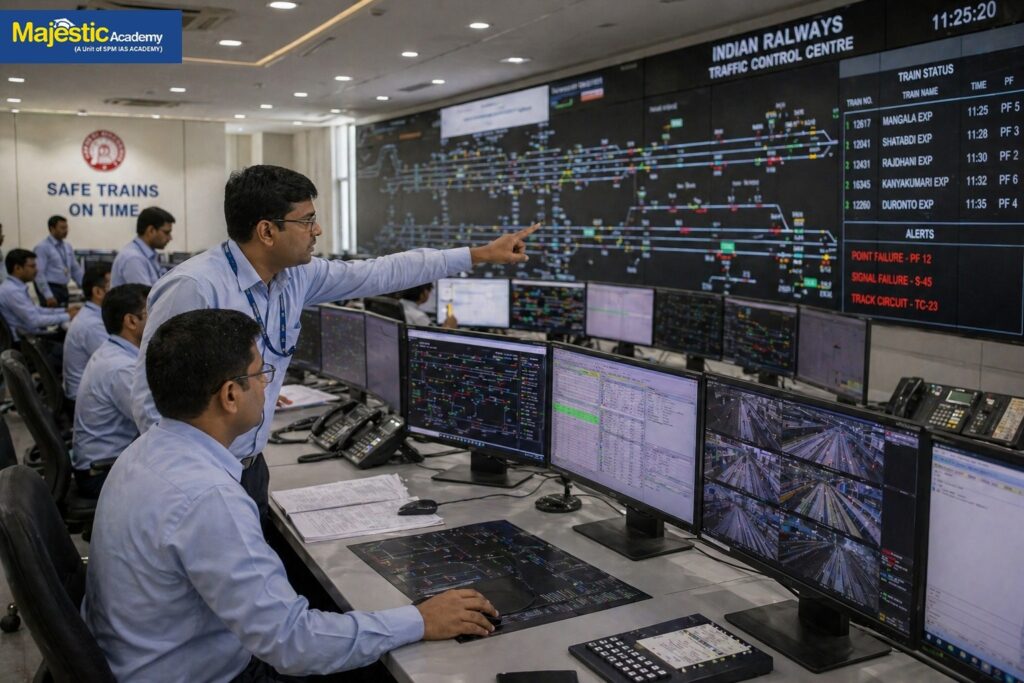
Now that you know the headquarters, let us go through the divisions that fall under each zone. Railway Zones are subdivided into a total of 68 divisions, and each division handles operations for a specific portion of the zone’s territory.
| Railway Zone | Divisions |
| Central Railway | Mumbai (CST), Bhusawal, Nagpur, Solapur, Pune |
| Eastern Railway | Asansol, Howrah, Malda, Sealdah |
| East Central Railway | Danapur, Dhanbad, Mughalsarai, Samastipur, Sonpur |
| East Coast Railway | Khurda Road, Sambalpur, Waltair |
| Northern Railway | Ambala, Delhi, Lucknow, Moradabad, Ferozpur |
| North Central Railway | Allahabad, Agra, Jhansi |
| North Eastern Railway | Lucknow, Izzatnagar, Varanasi |
| Northeast Frontier Railway | Katihar, Alipurduar, Rangiya, Lumding, Tinsukia |
| North Western Railway | Ajmer, Bikaner, Jaipur, Jodhpur |
| Southern Railway | Chennai, Madurai, Palghat, Trichy, Trivandrum, Salem |
| South Central Railway | Guntakal, Guntur, Hyderabad, Nanded, Secunderabad, Vijayawada |
| South Eastern Railway | Adra, Chakradharpur, Kharagpur, Ranchi |
| South East Central Railway | Bilaspur, Nagpur, Raipur |
| South Western Railway | Bangalore, Hubli, Mysore |
| Western Railway | Mumbai (Central), Vadodara, Ratlam, Ahmedabad, Rajkot, Bhavnagar |
| West Central Railway | Bhopal, Jabalpur, Kota |
| Metro Railway | Not Applicable |
Metro Railway Kolkata is the only zone that does not follow the standard division structure since it operates exclusively within Kolkata’s metro rail network. A clear understanding of the RRB NTPC Exam Day Guidelines 2026 can help you stay fully prepared, follow all instructions correctly, and avoid last-minute confusion during the exam.
Zone-by-Zone Overview of Railway Zones in India
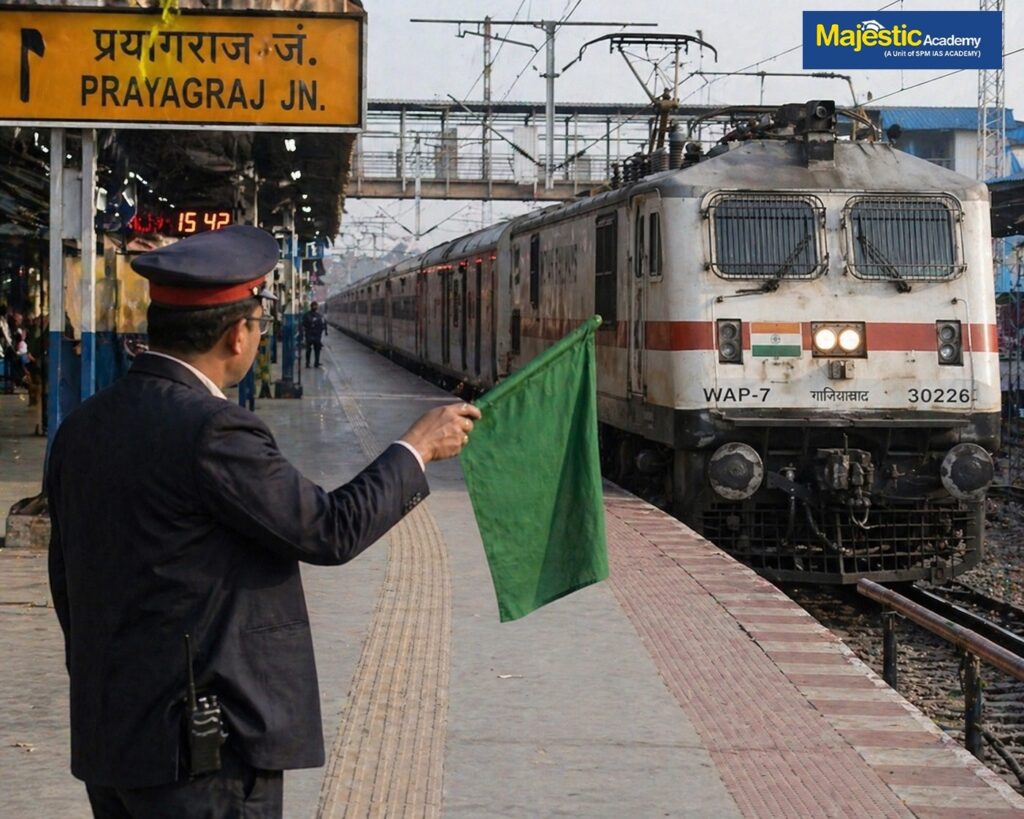
Central Railway
Central Railway is headquartered in Mumbai and covers one of the most traffic-heavy corridors in the country. Its five divisions, Mumbai CST, Bhusawal, Nagpur, Solapur, and Pune, manage operations across Maharashtra and parts of Madhya Pradesh. The Chhatrapati Shivaji Maharaj Terminus (CSMT) in Mumbai, which falls under this zone, is one of the busiest railway stations in all of India.
Eastern Railway
Eastern Railway, based in Kolkata, manages the eastern part of the country through four divisions, Asansol, Howrah, Malda, and Sealdah. Howrah Station, one of the oldest and largest railway stations in India, falls under this zone. This zone primarily covers West Bengal and parts of Jharkhand.
East Central Railway
East Central Railway has its headquarters in Hajipur, Bihar, and covers major portions of Bihar and Jharkhand. Its five divisions, Danapur, Dhanbad, Mughalsarai, Samastipur, and Sonpur handle operations across some of the most densely populated areas of the country.
East Coast Railway
East Coast Railway is a relatively newer zone with its headquarters in Bhubaneswar. It covers the eastern coastal belt of India, primarily Odisha and parts of Andhra Pradesh, through three divisions, Khurda Road, Sambalpur, and Waltair.
Northern Railway
Northern Railway is headquartered in New Delhi and is one of the most important zones in the country, given its location. Its five divisions, Ambala, Delhi, Lucknow, Moradabad, and Ferozpur, cover the states of Delhi, Haryana, Punjab, Uttar Pradesh, Himachal Pradesh, and Jammu & Kashmir.
North Central Railway
North Central Railway, based in Allahabad, manages three divisions, Allahabad, Agra, and Jhansi. This zone covers parts of Uttar Pradesh and Madhya Pradesh and handles some of the most important trunk routes in the Indian Railways system, including the Delhi–Mumbai and Delhi–Howrah corridors.
North Eastern Railway
North Eastern Railway is headquartered in Gorakhpur and operates through three divisions, Lucknow, Izzatnagar, and Varanasi. Gorakhpur, the headquarters of this zone, is home to what was once the longest railway platform in the world. This zone primarily covers eastern Uttar Pradesh and parts of Bihar.
Northeast Frontier Railway
The Northeast Frontier Railway, with its headquarters in Guwahati, manages the northeastern region of India through five divisions, Katihar, Alipurduar, Rangiya, Lumding, and Tinsukia. This zone covers the seven northeastern states along with parts of West Bengal and Bihar, connecting some of the most geographically challenging terrain in the entire country.
North Western Railway
North Western Railway is headquartered in Jaipur and covers Rajasthan and parts of Gujarat and Haryana through four divisions, Ajmer, Bikaner, Jaipur, and Jodhpur. This zone plays a key role in connecting the desert regions of western India to the rest of the network.
Southern Railway
Southern Railway, based in Chennai, is one of the oldest zones in the country. It manages six divisions, Chennai, Madurai, Palghat, Trichy, Trivandrum, and Salem, covering Tamil Nadu, Kerala, and parts of Andhra Pradesh and Karnataka. With six divisions, it is among the zones with the most divisions in the Railway Zones in India list.
South Central Railway
South Central Railway is headquartered in Secunderabad and covers Telangana, Andhra Pradesh, and parts of Maharashtra and Karnataka through six divisions, Guntakal, Guntur, Hyderabad, Nanded, Secunderabad, and Vijayawada.
South Eastern Railway
South Eastern Railway, based in Kolkata, handles operations in West Bengal, Jharkhand, and Odisha through four divisions, Adra, Chakradharpur, Kharagpur, and Ranchi. IIT Kharagpur, famous as it is, sits right next to one of the major stations in this zone’s network.
South East Central Railway
South East Central Railway is headquartered in Bilaspur and covers Chhattisgarh and parts of Madhya Pradesh and Maharashtra through three divisions, Bilaspur, Nagpur, and Raipur. This zone is particularly important for freight movement, given the coal and steel belt it passes through.
South Western Railway
South Western Railway is based in Hubli and manages Karnataka through three divisions, Bangalore, Hubli, and Mysore. This zone connects major cities of Karnataka and handles both passenger and freight traffic across the state.
Western Railway
Western Railway is headquartered at Mumbai CST and is one of the most heavily trafficked zones in the country. Its six divisions, Mumbai Central, Vadodara, Ratlam, Ahmedabad, Rajkot, and Bhavnagar, cover Gujarat, Rajasthan, Madhya Pradesh, and Maharashtra.
West Central Railway
West Central Railway, based in Jabalpur, manages three divisions, Bhopal, Jabalpur, and Kota. This zone covers Madhya Pradesh and parts of Rajasthan, handling both important passenger routes and significant freight corridors.
Metro Railway, Kolkata
Metro Railway Kolkata is the only metro-specific zone in the railway zones. It is headquartered in Kolkata and operates the Kolkata Metro, which was India’s first metro rail system. Since it covers only the metro network within Kolkata, it does not follow the standard divisional structure that the other 16 zones use. If you are preparing for railway exams, understanding roles like the RRB NTPC Station Master Job can help you explore career opportunities within such unique railway systems.
Why the Division and Headquarters Structure Matters
The division and headquarters system within railway zones in India is not just an administrative formality, it genuinely drives how well the entire network functions. Here is why this structure is so important:
Administrative Efficiency: Each division manages its own operations within a specific geographical boundary, which makes decision-making faster and more focused. Without this structure, managing 7,000-plus stations from a single central point would simply not work.
Localized Decision Making: Divisions allow local managers to customize services based on regional passenger behavior, freight patterns, and infrastructure conditions. A DRM in Guwahati understands the needs of the northeastern region far better than anyone sitting in Delhi could.
Operational Control: Each division directly controls train movements, track maintenance schedules, and station-level operations within its area. This ensures that problems get addressed quickly without going through multiple layers of approval.
Customer Service: Divisions handle passenger grievances, ticketing issues, and freight customer concerns at the ground level. This brings the railway administration closer to the people it serves, rather than keeping everything centralized and distant.
Maintenance and Upkeep: Tracks, signals, stations, and other infrastructure all fall under the maintenance responsibility of the respective division. Regular upkeep at the divisional level is what keeps the network safe and reliable day after day.
Brief History of the Divisional Structure in Indian Railways
The divisional structure in Indian Railways did not appear overnight. It evolved gradually over time as the network grew larger and more complex. In the early days of Indian Railways under British rule, the system was organized into broad regions managed by different private railway companies. As the government took over and unified the network after Independence, the need for a more structured administrative framework became clear.
The zonal and divisional structure gradually took shape through the 1950s, 1960s, and beyond, with new zones created as the network expanded into newer regions. The Northeast Frontier Railway, for example, was set up to address the unique challenges of operating in the northeastern states. More recently, newer zones like the East Coast Railway were carved out to bring better administrative focus to rapidly growing regions. Each new zone or division that gets added reflects Indian Railways’ ongoing effort to manage its growing network more effectively.
Key Facts About Railway Zones in India
- Indian Railways currently has 17 zones and 68 divisions across the country.
- Each zone is headed by a general manager (GM).
- Each division is headed by a Divisional Railway Manager (DRM).
- Two zones share Kolkata as their headquarters, Eastern Railway and South Eastern Railway.
- Two zones share Mumbai as their headquarters, Central Railway and Western Railway.
- Metro Railway Kolkata is the only zone without standard divisions.
- Northeast Frontier Railway covers all seven northeastern states.
- Southern Railway has the most divisions among all zones, with six.
- Indian Railways serves more than 20 million passengers every day.
- The network covers over 7,000 stations across the country.
Conclusion
Railway zones in India represent one of the most well-thought-out administrative structures in any public sector organization in the country. Dividing such a massive network into 17 zones and 68 divisions allows Indian Railways to function efficiently, address local needs quickly, and maintain safe and reliable services for more than 20 million passengers every single day. The 17 zones, from Central Railway in Mumbai to Northeast Frontier Railway in Guwahati, each play a distinct and irreplaceable role in keeping India connected. And the divisional structure underneath each zone is what makes sure the trains keep running, the tracks stay maintained, and the passengers keep reaching where they need to go.
That is the real power of how Indian Railways organizes itself, and now you know exactly how it all works.
Frequently Asked Questions
Q1. How many railway zones are there in India?
As per the official PIB press release from 2017, Indian Railways is divided into 17 railway zones, each further subdivided into divisions that total 68 across the entire country. Each zone operates under a general manager who oversees all operations within that region. The zones were created to decentralize the management of India’s massive rail network, which spans thousands of kilometers and handles both passenger and freight traffic every day. Metro Railway Kolkata is also counted as a separate zone, making it 17 in the official list, though some sources count it separately, given its unique structure. The number of zones has grown over the decades as newer regions needed dedicated administrative focus and as the network itself expanded.
Q2. Where is the headquarters of the Northern Railway Zone?
The headquarters of Northern Railway are located in New Delhi. This zone is one of the most strategically important among all railway zones in India because of its location in the capital region and its coverage of major states, including Delhi, Haryana, Punjab, Uttar Pradesh, and Himachal Pradesh. Northern Railway operates through five divisions, Ambala, Delhi, Lucknow, Moradabad, and Ferozpur, and handles some of the busiest train routes in the country, including several Rajdhani and Shatabdi services that connect the capital to other major cities.
Q3. What is the headquarters of the Central Railway Zone?
Central Railway is headquartered in Mumbai, specifically at Chhatrapati Shivaji Maharaj Terminus, which is also one of the most iconic railway stations in India and a UNESCO World Heritage Site. Central Railway manages five divisions, Mumbai CST, Bhusawal, Nagpur, Solapur, and Pune, and covers large parts of Maharashtra along with portions of Madhya Pradesh. The zone handles enormous passenger traffic daily, especially on the Mumbai suburban railway network, which is one of the busiest urban rail systems in the world. Because Mumbai is also the headquarters of Western Railway, the city holds a unique distinction of being home to two major railway zone headquarters simultaneously.