When candidates look at the list of posts under RRB NTPC, one post consistently stands out above all the others, Station Master. It is the most reputed post in the entire RRB NTPC selection, and it attracts over 2 lakh applicants every year for just 600 to 700 vacancies. Yet, despite the enormous competition, most aspirants who target this post have only a surface-level idea of what the job actually involves once they join.
The station master job profile is far more demanding, more interesting, and more responsible than most people expect. You are not just sitting at a desk managing a station, you are the person who controls every train movement through your station, handles emergencies, supervises staff, and makes real-time decisions that affect thousands of passengers every single day. So, before you decide to chase this post, it helps to understand exactly what you are signing up for.
This article gives you the complete picture, from core duties and shift patterns to salary, medical standards, and the full career growth path. For exam preparation, you can also check the RRB NTPC Syllabus 2026.
Why the Station Master Post Is So Competitive
The station master job profile carries a level of authority and on-ground responsibility that few other government posts at the same pay level offer. Station Masters enjoy high social standing in their communities; the role provides genuine decision-making power from Day 1, and the career path leads clearly to senior management positions within Indian Railways.
Add to that a strong starting salary, job security, and the dynamic nature of the work, no two shifts are ever the same and it becomes obvious why this post draws so much competition. Over 2 lakh candidates apply for just 600 to 700 Station Master vacancies in each RRB NTPC cycle.
Station Master Job Profile: Core Role and Authority
At its heart, the Station Master Job Profile revolves around one non-negotiable responsibility, no person other than the Station Master can give line clearance to allow a train to proceed. That single authority makes the Station Master the final decision-maker for every train movement through the station. Every arrival, every departure, every signal all of it runs through you.
Beyond this core authority, Station Masters manage complete train operations at their assigned station, operate signals, coordinate with adjacent stations and traffic control rooms, ensure punctual arrivals and departures, and take charge during any emergency situation. It is a role that combines technical knowledge with people management and crisis response, all happening simultaneously during a single shift. If you are preparing for railway exams, understanding the RRB NTPC Exam Day Guidelines 2026 can help you stay fully prepared and avoid last-minute confusion.
Day-to-Day Duties: What the Station Master Job Profile Actually Involves
Train Operations and Signal Management
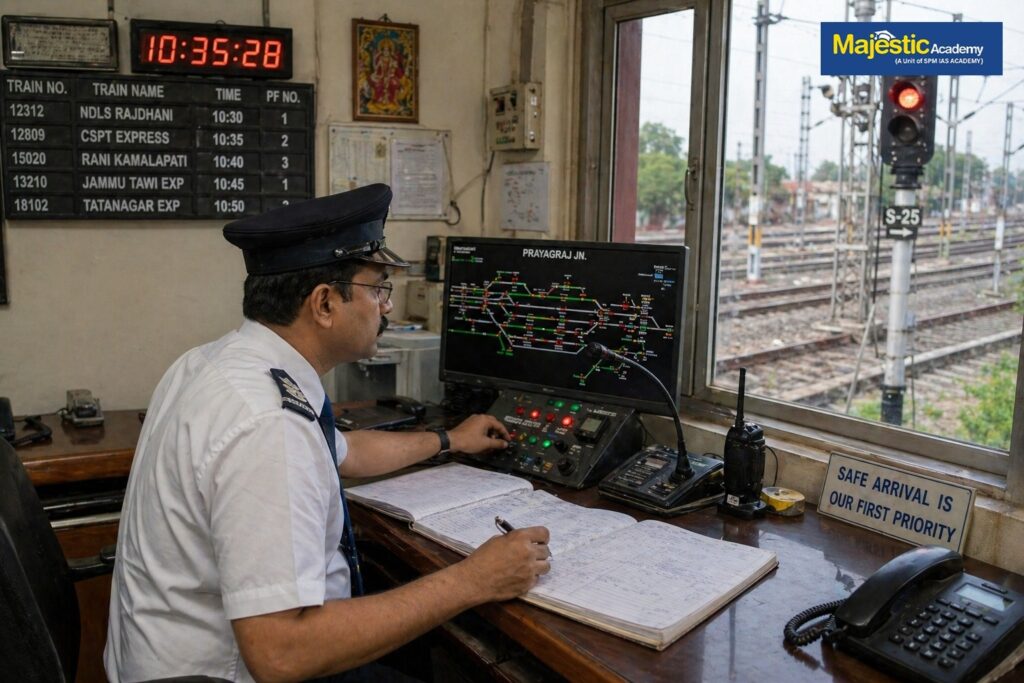
The biggest part of the station master job profile is managing the movement of trains through the station. You coordinate arrivals and departures, assign platforms based on real-time conditions, and operate signal equipment at precise times according to the train schedule. All functions at the station must run strictly as per the rules and regulations of Indian Railways, and a single mistimed signal does not just affect one train. It can cascade delays across the entire network and impact thousands of passengers simultaneously.
Modern stations use electronic signaling systems, but manual backup systems remain mandatory for safety compliance. At the start of every shift, a station master verifies every signal aspect, checks point operations, and confirms communication lines with all adjacent stations before operations begin. No shift starts without completing this checklist.
Daily equipment checks before each shift are a fixed responsibility. Signal lights, track circuits, point machines, and communication systems all need verification. Any deficiency gets reported immediately and must be corrected without delay before operations continue. If you want to understand how this responsibility compares with other railway roles, you can read this detailed comparison of RRB NTPC vs RRB Group D.
Platform Management and Passenger Safety
Platform assignment during peak hours is a skill in itself. At major junction stations, a station master manages 80 to 150 train movements every day across 6 to 8 platforms. You coordinate continuously with the traffic control room, neighboring station masters, and train crews to optimize platform use and avoid bottlenecks.
Passenger safety sits at the center of the station master job profile. You monitor crowding on platforms, coordinate with the Railway Protection Force during rush hours, and ensure that gap boards are correctly positioned at all times. Passengers boarding and deboarding trains safely is your responsibility, not just operationally, but legally.
Station Maintenance and Commercial Functions
At larger stations, dedicated staff handle maintenance supervision and commercial activities. But at smaller and nonmetropolitan stations, the station master takes on these responsibilities directly. This includes overseeing cleanliness and maintenance, conducting weekly inspections of station amenities, monitoring toilets, drinking water facilities, and waiting rooms, and reporting any deficiencies to the engineering and commercial departments.
At smaller stations, station masters also handle ticket booking, parcel booking, reservations, and revenue collection directly. This makes the role broader and more varied at smaller postings compared to larger ones, where these functions run through dedicated booking staff.
Emergency Response and Crisis Management
This part of the station master job profile is what separates it from most other government jobs. When an accident or emergency happens at the station or in its vicinity, the Station Master becomes the incident commander until senior officers arrive on the scene. You take charge, coordinate the evacuation of injured and stranded passengers, protect evidence at the site, arrange relief trains, and maintain continuous communication with the divisional control office.
During natural disasters, law and order situations, or medical emergencies, you bring together the railway police, local administration, and railway medical services, and you coordinate them all. Every decision you make in those moments has direct consequences for passenger safety. After any yard accident, you also conduct an investigation, gather statements from involved staff, and submit a full report with conclusions to divisional headquarters.
Work Schedule and Shift Patterns
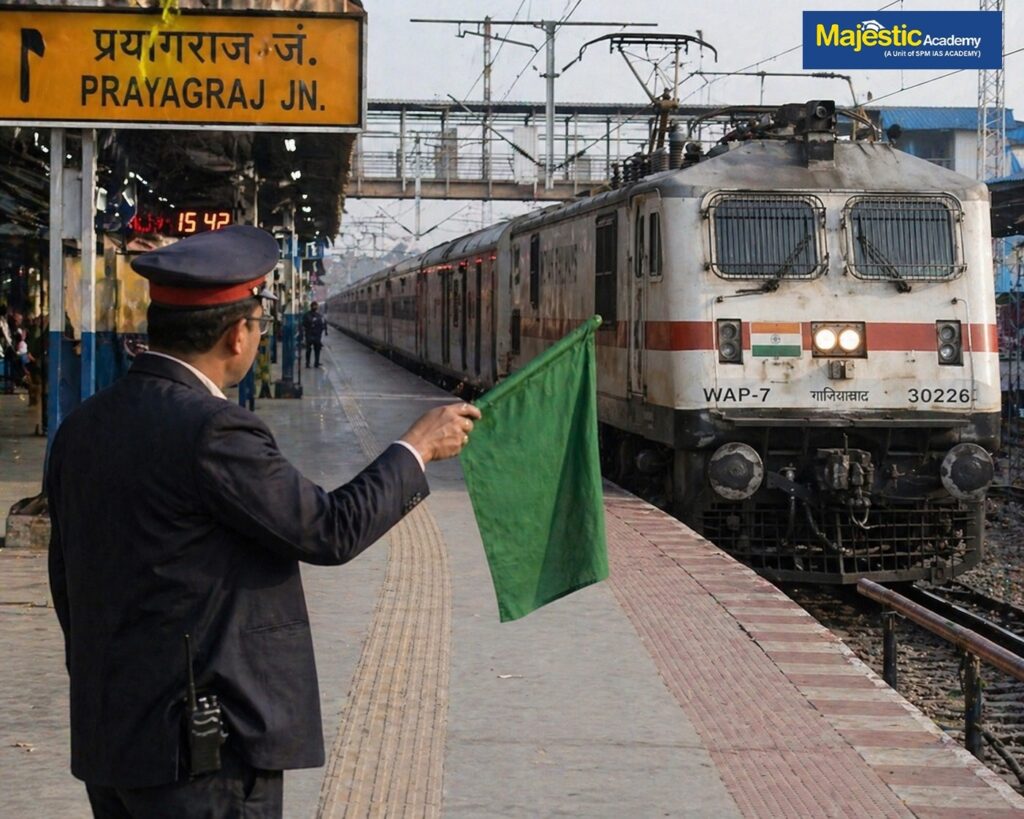
The station master job profile does not follow a 9-to-5 routine. Stations operate 24 hours a day, 7 days a week, 365 days a year. Typically, four station masters are posted at each station, and they work in rotating shifts to cover continuous operations. The shift pattern generally looks like this:
- Morning Shift — 6 AM to 2 PM: This covers peak passenger hours and the busiest train coordination window of the day.
- Afternoon Shift — 2 PM to 10 PM: This handles the evening rush along with staff supervision responsibilities.
- Night Shift — 10 PM to 6 AM: This covers maintenance coordination windows and heavy freight train movements that typically run through the night.
Night shifts, weekends, and public holidays are all part of the job. Peak hours can involve managing 8 to 10 simultaneous train movements while handling passenger queries and coordinating with multiple departments at the same time. Staying calm under that kind of pressure is not optional, it is a core part of what the role demands. For a complete overview, you can also explore the RRB NTPC Posts List.
Staff Supervision and Coordination
At larger stations, a station master manages a team of 15 to 30 people, including booking clerks, platform attendants, porters, pointsmen, and gatemen. Daily briefings before each shift, performance monitoring, attendance management, and ensuring rule compliance across all staff members all fall under your day-to-day supervision duties.
Beyond internal staff, the job profile requires constant coordination with multiple departments. You communicate with loco pilots and guards about train movements, update the traffic control room on operational status, work with the Engineering Department on track maintenance schedules, coordinate with the Signal Department for any equipment issues, and stay in touch with the Commercial Department on revenue matters. The role sits at the intersection of all these departments, which is what makes it so operationally important.
Large Station vs Small Station: How the Job Differs
The station master job profile looks somewhat different depending on whether you are posted at a major metro junction or a smaller rural station. Here is how the two compare:
| Aspect | Large Metro Stations | Small Rural Stations |
| Primary Focus | Train coordination, staff management | Direct operations, commercial activities |
| Team Size | 20 to 40 staff members | 3 to 8 staff members |
| Train Movements | 80 to 150 trains daily | 15 to 30 trains daily |
| Commercial Role | Minimal, dedicated booking staff | Direct ticket and parcel booking |
| Decision Complexity | High — multiple simultaneous operations | Moderate—sequential operations |
| Shift Intensity | High stress, continuous coordination | Balanced with administrative tasks |
| Career Impact | Faster promotions, higher visibility | Broader skill development |
Both types of postings have value. Larger stations build your coordination skills faster and improve your visibility for promotions. Smaller stations give you broader exposure to the full range of responsibilities that the station master role carries.
Station Master Salary and Financial Benefits
The Station Master job profile comes with a starting basic pay of Rs 35,400 per month, which falls under Pay Level 6 of the 7th Pay Commission. Once you add all applicable allowances, Dearness Allowance, House Rent Allowance, Transport Allowance, and other railway-specific allowances, the total in-hand salary works out to approximately Rs 50,000 to Rs 55,000 per month at the entry level.
As you move up through promotions, the salary increases significantly at each stage, with senior positions like Assistant Operations Manager and Divisional Railway Manager carrying substantially higher pay packages.
Medical Standards for Station Master
The medical fitness requirements for the Job Profile are strict, and for good reason. Safe train operations depend on the physical fitness of the person controlling them.
The vision requirements are non-negotiable. A Station Master must have distant vision of 6/9 without glasses. Near vision must meet the standard of Sn 0.6. Beyond that, candidates must pass tests for colour vision, binocular vision, and night vision. Any failure in these medical standards disqualifies the candidate from this post, regardless of their written exam performance.
These standards exist because signal operations require perfect visual clarity. A Station Master who cannot correctly identify signal aspects or distinguish between signal colours is a safety risk, which is why Indian Railways does not compromise on these criteria.
Is This Role the Right Fit for You?
The job profile suits a specific kind of person. It is a strong choice if you thrive under pressure and can make sharp decisions during emergencies, if you are comfortable with rotating shifts, including nights and weekends, if you want real authority and responsibility early in your career, and if you prefer active fieldwork over a desk-bound job.
On the other hand, you should think carefully before targeting this post if you need fixed working hours without shift rotations, if you find it hard to multitask in high-stress environments, or if you have any physical limitations affecting your vision or hearing that might affect passing the medical standards.
In terms of social standing, Station Masters continue to enjoy genuine respect in their communities. The role carries visible authority, and the community around a railway station recognizes the station master as the person in charge, which is something that matters in Indian society and adds to the appeal of the post.
Career Growth Path After Station Master
The career progression from the station master follows a well-defined ladder within Indian Railways. Station masters are promoted to higher levels after completing 10 years of service, though exceptional performers at high-traffic stations with strong performance records and accident-free service may see promotions in 7 to 8 years through competitive quota positions.
The promotion path looks like this:
- Station Master—Entry level, Pay Level 6
- Station Superintendent — Pay Level 7, after departmental exam and suitability assessment
- Assistant Operations Manager — Senior operational role
- Divisional Railway Manager (DRM) — Top divisional management position
Your station’s traffic density, your accident-free service record, and your annual performance appraisal reports all directly influence how fast you move up. Stations with higher train movement volumes offer greater visibility to divisional management, which translates into better career growth prospects for officers who perform well there.
Conclusion
The Station Master job profile is genuinely one of the most challenging and rewarding posts that Indian Railways offers at the entry level. You carry real authority from Day 1, handle high-stakes operational decisions every shift, manage staff, respond to emergencies, and play a direct role in the safe movement of thousands of passengers every single day. Start your RRB NTPC preparation with this post as your goal, understand the full scope of what the role demands, and go after it with the seriousness it deserves. The vacancy count may be small, but the opportunity it represents is large.
Frequently Asked Questions
Q1. Can a station master refuse to clear a train for departure if something seems unsafe?
Yes, absolutely, and this is one of the defining features of the Station Master Job Profile. No other person at the station holds the authority to give line clearance for a train to proceed. The station master has full authority to delay a departure or refuse line clearance if any safety concern exists, whether it involves an equipment malfunction, a track obstruction, signal failure, adverse weather conditions, or any other factor that could compromise safe train movement. This authority comes with complete accountability, meaning the Station Master must document and justify every delay with a written explanation. However, the rule is clear that passenger safety always takes precedence over punctuality in every situation. The role is designed this way because someone at each station needs the final word on safety, and that person is always the Station Master.
Q2. What happens if a Station Master makes an error that causes a train delay or accident?
Errors that lead to train delays trigger a departmental inquiry process where the station master submits a written explanation detailing what happened and why. Minor delays caused by judgment calls under genuine operational pressure rarely result in penalties, especially when the explanation is reasonable and properly documented. However, rule violations that lead to accidents carry serious consequences, these include suspension pending a full inquiry, financial penalties, loss of seniority, demotion, or, in severe cases, termination of service. Indian Railways maintains extremely strict accountability standards for safety-related breaches because the consequences of railway accidents are so significant. This level of accountability is precisely why the role demands constant vigilance, strict rule adherence, and a genuine commitment to safety at every single moment of every shift.
Q3. How long does it take to get promoted from Station Master to Station Superintendent?
The standard service period for promotion from station master to station superintendent is 10 years, after which station masters become eligible for automatic promotion, subject to available vacancies. However, candidates at high-traffic stations who maintain excellent performance records and accident-free service can sometimes see promotion in 7 to 8 years through competitive quota positions. Promotion to Station Superintendent, which falls at Pay Level 7, requires passing a departmental exam and going through a suitability assessment conducted by the division. Three factors have the biggest impact on how quickly you move up: the traffic density of your posting, the strength of your annual performance appraisal reports year over year, and your service record in terms of discipline and safety compliance. Officers posted at busy junctions with high train movement volumes tend to get more visibility with divisional management and generally see faster career movement.