This question comes up constantly among government job aspirants, and the honest answer is, yes, you absolutely can. Preparing for SSC and banking together is not just a theory. Thousands of candidates do it every year, and many of them end up clearing both. The reason this works is straightforward: a large chunk of the syllabus overlaps between the two. Quantitative Aptitude, Reasoning Ability, and English Language are core subjects in both Banking and SSC exams. So when you prepare one, you are already building the foundation for the other.
That said, preparing for SSC and banking together does require a clear strategy. You cannot just mix the two and hope things work out. This blog gives you everything you need, a subject-wise breakdown of similarities and differences, how to approach each exam from the other’s perspective, time management tips, and a realistic plan for candidates working a bank job alongside SSC preparation. For candidates looking to build a strong foundation for banking exams, joining the Best Banking Coaching in Guwahati can provide expert guidance, structured study plans, and regular practice sessions to improve exam preparation.
Why Does It Make Sense to Prepare SSC and Banking Together?
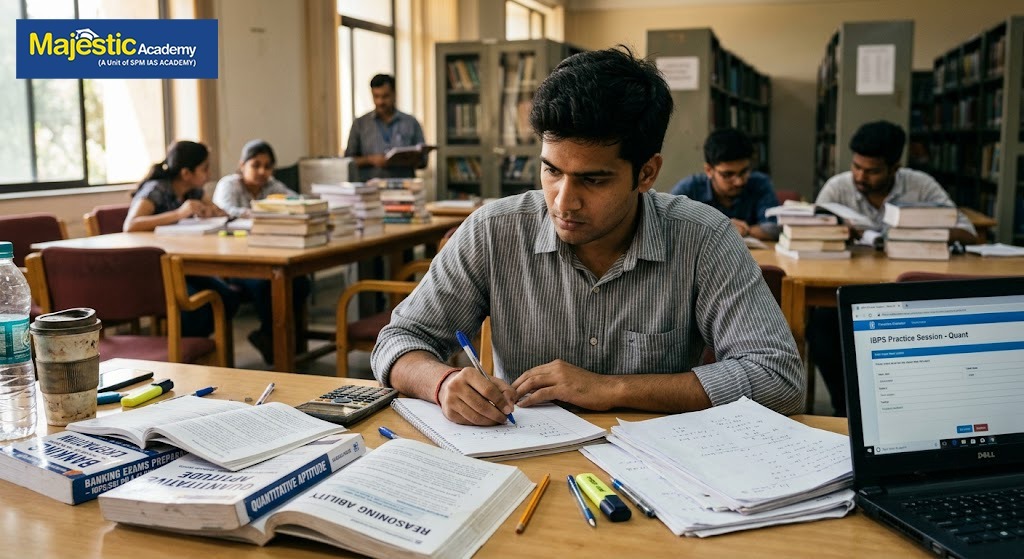
The biggest reason candidates consider preparing for SSC and banking together is the syllabus overlap. Roughly 50 to 60 percent of the preparation for both exams covers common ground. Here is what the two exam families share:
Quantitative Aptitude: Arithmetic word problems like simple interest, compound interest, profit and loss, averages, and partnership appear in both. Simplification, quadratic equations, algebra, and approximation are also common to both, though the pattern and difficulty level differ.
Reasoning Ability: Topics like coding-decoding, inequalities, syllogism, and missing or wrong number series appear in both SSC and banking exams. However, the type and complexity of questions vary significantly between the two.
English Language: Reading Comprehension, Grammar, Vocabulary, Sentence Correction, and Para Jumbles are important in both exams. If you build a daily habit of reading editorial content and learning basic grammar rules, that effort serves you well across both exam families.
So when you build a strong foundation in these three subjects, you are effectively covering the majority of both exam syllabi at the same time. The remaining preparation splits into specialised areas, Banking Awareness and complex puzzles or DI for banking exams, and advanced Maths, Static GK, and General Science for SSC. For candidates who want structured guidance, expert faculty support, and a focused preparation strategy, joining a dedicated coaching program can help improve their learning process. Aspirants preparing for SSC exams can explore the benefits of professional guidance through SSC Coaching in Guwahati, where they can get access to a planned curriculum, regular practice sessions, and exam-oriented preparation.
What Are the Key Differences Between SSC and Banking Exams?
Even though preparing for SSC and banking together is practical, you need to be aware of where the two diverge. Ignoring the differences is what trips up most aspirants.
Exam Structure: Banking exams at the clerk level run across prelims and Mains. PO-level exams also include an interview. Both phases have sectional timings and sectional cut-offs, meaning you need to score well in each section separately to clear the overall cut-off.
SSC exams like CGL and CHSL run across Tier 1 and Tier 2. Tier 1 has no sectional timing. Tier 2 has sectional timing in 2 to 3 sections, with each section divided into parts. There is no sectional cut-off in SSC, but a balanced performance across sections is still important.
Difficulty Level: In banking exams, Reasoning and Quantitative Aptitude are harder than their SSC counterparts. Puzzles, Seating Arrangements, and Data Interpretation dominate banking Mains and are barely present in SSC. In contrast, SSC exams focus more on conceptual and theoretical knowledge — advanced Maths topics like Geometry, Trigonometry, Figure Patterns, and Counting Figures are heavily tested in SSC but not in banking.
General Awareness: Banking exams focus on Banking Awareness, RBI circulars, financial and economic trends, budget highlights, and major banking events in India. SSC exams focus on Static GK covering History, Polity, Geography, Economy, and General Science, along with major government schemes and their implementation dates.
For candidates preparing for banking exams, improving vocabulary, reading comprehension, grammar, and accuracy in English can significantly improve their overall score. A proper study strategy and regular practice can help aspirants perform better in the English section. You can also follow this detailed guide on English Preparation for Banking Exams to understand useful tips and preparation methods.
Here is a clear comparative snapshot:
| Exam Stage | Banking Exams (IBPS, SBI, RRB, RBI) | SSC Exams (CGL, CHSL, CPO) |
| Prelims / Tier 1 | Quantitative Aptitude, Reasoning, English | Quantitative Aptitude, Reasoning, English, General Awareness |
| Sectional Timing | Applies in both Prelims and Mains | Only in Tier 2 |
| Sectional Cut-off | Yes—must score well in each section | No, the overall score determines shortlisting |
| Mains / Tier 2 | Quant/DI, Reasoning, English, Banking Awareness | Section 1: Maths and Reasoning; Section 2: English and GK; Section 3: Computer Knowledge |
| Interview | Yes—for most PO-level exams | Some exams include a typing test or physical standard test. |
| Negative Marking | Yes—in both Prelims and Mains | Yes—in both Tier 1 and Tier 2 |
How Should an SSC Aspirant Approach Banking Exams?
If you already prepare for SSC, you have the basics of Quantitative Aptitude, Reasoning, English, and General Awareness in place. Shifting to banking does not require starting from scratch — it requires adding the specific elements that banking exams test heavily but SSC does not.
Practice one puzzle set daily. Puzzles and Seating Arrangements are the backbone of banking Reasoning sections. Floor-based puzzles, seating arrangement puzzles, order and ranking puzzles, scheduling puzzles, and box-based puzzles all appear regularly. SSC does not test these, so if you have been preparing purely for SSC, this is a gap you need to fill with consistent daily practice.
Add Data Interpretation practice. DI is a core part of banking Quantitative Aptitude. Bar-graph questions, pie-chart questions, line-graph questions, caselet DI, and data analysis questions all show up in banking Mains. Practicing different DI types daily improves both speed and comfort with this question format.
Build Banking Awareness knowledge. Banking Awareness covers RBI circulars, financial and economic trends, budget explanations, and major banking events in India. Solving Banking Awareness questions daily keeps you current and exam-ready for this section, which has no real equivalent in SSC preparation.
Learn important banking terms and concepts. Many banking terms simply do not come up in SSC preparation. Start with a structured list of important banking terms and follow it up with topic-wise tests to understand how questions from these terms get framed in actual exams.
Take banking-specific mock tests. Banking question patterns are quite different from SSC, and no amount of SSC mock experience fully prepares you for banking-style questions. Banking-specific mocks expose you to the actual question types, help you identify your weak areas, and let you practice the time pressure of sectional timings. Understanding career opportunities after clearing government exams also helps aspirants stay motivated and focused. Read this guide on Life After Clearing SSC CGL to know about career growth and future prospects.
How Should a Banking Aspirant Approach SSC Exams?
If you are a banking aspirant and want to prepare SSC and banking together, you already have a strong base in Quantitative Aptitude and Reasoning. SSC exams are more focused on speed, how quickly you can solve questions accurately, and on General Knowledge and General Science, which banking preparation does not cover in depth.
Focus on Advanced Maths. Topics like Geometry, Trigonometry, Figure Patterns, and counting figures appear heavily in SSC exams and are not part of banking preparation. For this, take topic-wise tests regularly and build speed in solving these question types through consistent mock practice. Solve 400 to 500 question sets for each subject to build the speed SSC demands.
Cover major government schemes. SSC exams regularly test knowledge of major government schemes, their implementation dates, and important historical events. This is not something banking preparation covers, so allocate specific time to building this knowledge base.
Build Static GK from the ground up. For General Knowledge, focus on History, Polity, Geography, Economy, and important historical events. NCERT textbooks from Class 6 to Class 12 cover most of what SSC GK sections test, so reading them systematically gives you a solid foundation.
Study General Science from NCERTs. General Science is tested in SSC exams but not in banking. Read NCERT Science books for Class 6 to Class 10 and take regular topic tests to keep concepts fresh and practice the speed that SSC Tier 1 demands.
Read Current Affairs daily. SSC exams test current affairs alongside Static GK. Read daily, weekly, and monthly current affairs regularly to stay up to date. Even 15 to 20 minutes of focused current affairs reading every day adds up over weeks and months of preparation.
Take SSC-specific mock tests. Just as banking-specific mocks are essential for banking preparation, SSC-specific mocks are necessary for SSC preparation. Attempt these mocks regularly and analyse your mistakes after every test—this is where actual improvement happens.
How Do You Manage Time If You Are Preparing for a Bank Job?
Preparing for SSC and banking together becomes even more demanding when you have a full-time bank job running alongside. However, many candidates manage this successfully with disciplined time management.
Here is a realistic sample daily schedule that working candidates use:
| Time of Day | Activity |
| Early Morning | Study for 1 to 2 hours—use this time for conceptual topics that need focus |
| Lunch Break | Revise notes or take a quick practice quiz |
| Evening | Study for 1 to 2 hours—use this for practice questions and topic tests |
| Weekends and Holidays | Long study sessions and full-length mock tests |
A few things that make this schedule work in practice:
Early morning hours are the most productive for most people. Use them for subjects that need concentration, advanced Maths, Reasoning puzzles, or Current Affairs reading.
Lunch breaks are short, so use them for revision rather than new learning. Flashcards, formula sheets, and quick quizzes work well here.
Evening sessions work best for practice questions and mock test analysis. After a full day at work, your brain retains information better through active problem solving than passive reading.
Weekends are where you close the gaps. Use them for full-length mock tests, detailed analysis of mistakes, and covering topics you did not get to during the week.
Bank jobs also provide one real advantage, financial stability. You do not carry the financial pressure that full-time aspirants without a job face, which reduces overall stress and lets you focus more clearly on preparation.
How Do You Handle Stress While Preparing SSC and Banking Together?
Preparing SSC and banking together is mentally demanding. Without active stress management, burnout becomes a real risk. Here is what actually works:
Exercise regularly. Even simple activities like walking, jogging, or yoga for 30 minutes a day reduce stress, improve blood circulation, and help your brain function better during study sessions.
Eat well. A balanced diet with brain-friendly foods like nuts, fish, and leafy greens keeps your energy and focus steady throughout the day. Avoid heavy processed food, especially before study sessions.
Practice meditation or yoga. Even 15 to 20 minutes of daily meditation or yoga reduces anxiety noticeably and makes it easier to retain information.
Take structured breaks. Long continuous study sessions lead to burnout. Use the Pomodoro Technique, study for 25 minutes, then take a 5-minute break. This keeps your brain fresh and productive over longer periods without mental fatigue building up.
Can Beginners Crack Both SSC and Banking in the First Attempt?
Yes, and it happens regularly. Many beginners clear either a banking exam or an SSC exam on their first attempt. The key factors are smart planning, consistent practice, and honest analysis of mock test mistakes. The candidates who struggle are usually those who prepare without a clear subject-wise plan or who take mocks without actually reviewing what went wrong.
One important note on prioritization: If you have enough time before both exams, prepare for both together using the shared syllabus strategy. But if one exam is very close, say, SSC CGL is just one month away, give that exam full priority while maintaining light practice for the other. Spreading yourself equally thin in the final month before any exam is counterproductive.
Conclusion
Preparing SSC and banking together is not only possible, it is a smart strategy for anyone serious about landing a government job. With 50 to 60 percent syllabus overlap in Maths, Reasoning, and English, building a common foundation first saves you a significant amount of preparation time. After that, you only need to add specialised content, puzzles, DI, and Banking Awareness for banking exams; Advanced Maths, Static GK, and General Science for SSC.
The path of preparing for SSC and banking together is demanding, but it multiplies your opportunities. Two separate exam families, two sets of vacancies, and one overlapping preparation strategy, that is a very efficient way to pursue a government career. Stay consistent, manage your time with discipline, and remember that thousands of candidates before you have walked this exact path and come out successful. Your turn is next. Start today. For better preparation support and expert guidance, candidates can join a trusted coaching institute that provides structured learning and exam-focused strategies. Explore Majestic Academy to get the right guidance for your competitive exam journey.
Frequently Asked Questions
Can beginners crack both SSC and banking exams on the first attempt?
Yes, many beginners clear either banking or SSC on their first attempt. Success depends on smart planning, consistent daily practice, and regular analysis of mock test mistakes. Starting with a solid foundation in the three common subjects, math, reasoning, and English, gives beginners a strong base that works for both exam families simultaneously.
Should I focus on one exam first or prepare for both equally?
If you have enough time before both exams, preparing for both together using the overlapping syllabus makes sense. However, if one exam is approaching quickly, say within a month, give that exam full priority and keep only light practice going for the other. Trying to give both equal attention in the final stretch before an exam splits your focus at the worst possible time.
How can I manage stress while preparing for a demanding job?
Build stress management into your daily routine rather than treating it as optional. Regular exercise, even a short walk or yoga session, reduces stress and sharpens focus. Meditation for 15 to 20 minutes daily calms anxiety and improves information retention. Take structured short breaks during study sessions instead of grinding through long, continuous hours, which leads to burnout rather than better preparation.

Majestic Academy is a trusted coaching institute offering result-oriented SSC Coaching, Banking Coaching, and ADRE Coaching for competitive exam aspirants. Serving students across Guwahati and Assam, we provide structured preparation with expert faculty, updated study materials, and regular mock tests. Our specialized RRB Coaching in Guwahati helps railway exam candidates build strong fundamentals and gain exam confidence. We also offer focused TET Coaching in Guwahati for aspiring teachers with concept-based learning and exam-oriented guidance. At Majestic Academy, we are committed to quality education, clear mentoring, and consistent student success.