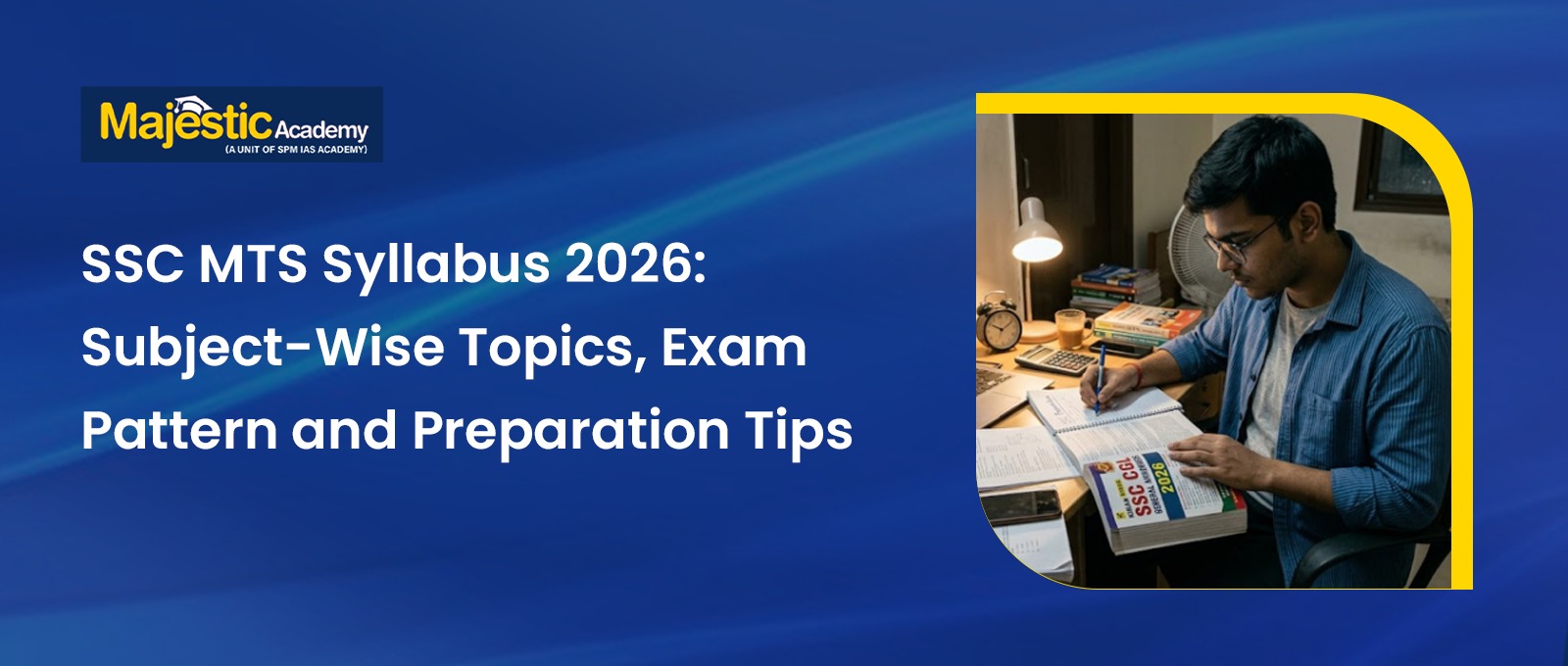
The SSC MTS syllabus is designed to test a candidate’s basic understanding of mathematics, reasoning, general awareness, and English at approximately the Class 10 level. Therefore, candidates should focus on building strong fundamentals, practising questions regularly and understanding the latest exam pattern before starting their preparation.
For candidates who want structured guidance, regular practice, and expert support during their preparation, joining SSC Coaching in Guwahati can be a helpful option. With the right coaching and a consistent study routine, candidates can strengthen their basics, improve their problem-solving skills, and prepare more confidently for the SSC MTS examination.
What Is the SSC MTS Syllabus 2026?
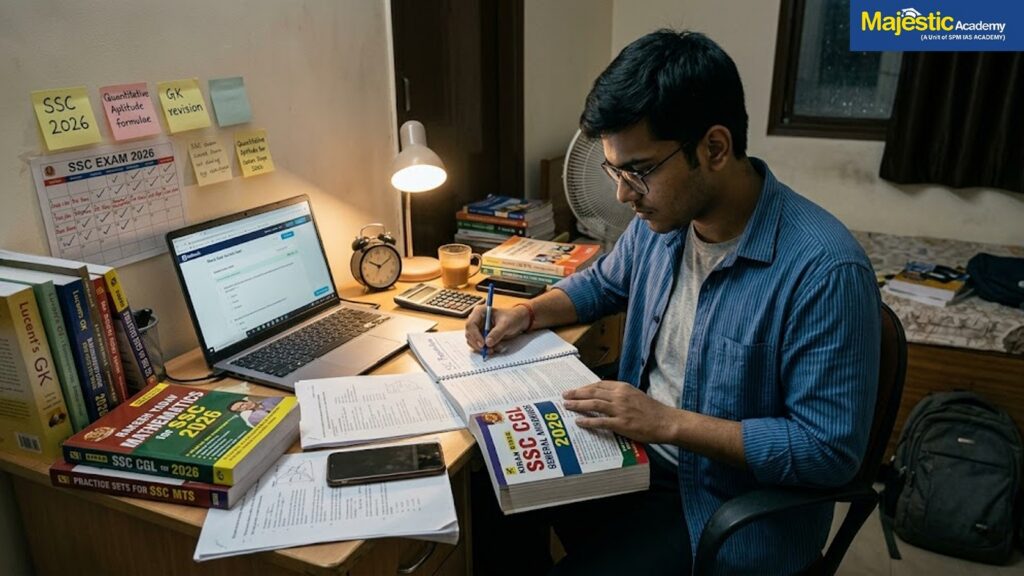
The SSC MTS syllabus covers four major areas: Numerical and Mathematical Ability, Reasoning Ability and Problem-Solving, General Awareness, and English Language and Comprehension. The computer-based examination is divided into two sessions, and candidates must appear for both sessions. For candidates preparing for other SSC examinations, choosing the right guidance can also make preparation more structured. If you are planning to appear for the CGL examination, you can explore SSC CGL Coaching in Assam for focused preparation and guidance.
1. Numerical and Mathematical Ability
This section of the SSC MTS syllabus tests basic arithmetic and numerical skills. Candidates should revise the following topics:
- Integers and Whole Numbers
- LCM and HCF
- Decimals and Fractions
- BODMAS
- Percentage
- Ratio and Proportion
- Profit and Loss
- Simple Interest
- Averages
- Time and Work
- Time, Speed and Distance
Candidates should practice calculations regularly because faster solving can help them manage Session 1 more effectively.
2. Reasoning Ability and Problem-Solving
The reasoning section of the SSC MTS syllabus evaluates logical thinking, pattern recognition, and problem-solving ability. Important topics include:
- Alpha-Numeric Series
- Coding and Decoding
- Analogy
- Similarities and Differences
- Directions
- Jumbling
- Non-verbal Reasoning
- Age Calculations
- Calendar
- Clock
Regular practice of previous-year questions can help candidates recognise commonly asked patterns.
3. General Awareness
General Awareness forms an important part of the SSC MTS syllabus, particularly because Session 2 determines merit. Candidates should cover basic concepts as well as important current events.
Key areas include:
- History: Ancient India and the Indian freedom struggle
- Geography: Physical geography, Indian climate and natural resources
- Polity: Indian Constitution and local government
- General Science: Physics, Chemistry and Biology
- Current Affairs: Important national and international events
For Science and Social Studies, Class 10-level NCERT books can provide a useful foundation.
4. English Language and Comprehension
The English section of the SSC MTS syllabus focuses on basic grammar, vocabulary and comprehension skills. Candidates should prepare:
- Synonyms and Antonyms
- One-word Substitution
- Parts of Speech
- Tenses
- Subject-Verb Agreement
- Error Detection
- Fill in the Blanks
- Reading Comprehension
- Sentence Structure
Reading short articles and solving grammar-based questions regularly can improve both accuracy and vocabulary. For students looking for structured guidance and regular practice, joining SSC CGL Coaching in Guwahati can provide the right preparation support.
What Is the SSC MTS Exam Pattern 2026?
The SSC MTS examination follows a two-session computer-based examination pattern. Candidates must appear for both sessions because failure to attempt a session can lead to disqualification.
| Session | Subject | Questions | Marks | Duration |
| Session 1 | Numerical and Mathematical Ability | 20 | 60 | 45 minutes |
| Session 1 | Reasoning Ability and Problem-Solving | 20 | 60 | 45 minutes |
| Session 2 | General Awareness | 25 | 75 | 45 minutes |
| Session 2 | English Language and Comprehension | 25 | 75 | 45 minutes |
| Total | — | 90 | 270 | — |
Eligible candidates using a scribe receive additional time according to the applicable examination rules.
Is Session 1 Qualifying in SSC MTS?
Yes. Session 1 primarily tests numerical and reasoning skills and is qualifying in nature. Its marks are not generally used for determining the final merit of MTS candidates. However, candidates must still take Session 1 seriously because they need to meet the prescribed qualifying requirements. Once they clear the qualifying stage, their performance in Session 2 becomes particularly important for merit and selection.
What Is the SSC MTS Negative Marking Scheme?
The SSC MTS syllabus should be studied alongside the marking scheme because candidates need to adjust their attempt strategy accordingly. For a clear understanding of the subjects, topics, and exam structure, candidates can refer to the SSC MTS Syllabus (Multitasking Staff) before planning their preparation.
- Session 1: No negative marking for incorrect answers.
- Session 2: 1 mark is deducted for every incorrect answer.
- Candidates should therefore attempt Session 2 questions carefully.
- Random guessing can reduce the overall score in the merit-determining session.
Does the SSC MTS Syllabus Change for Havaldar?
The written examination syllabus remains broadly the same, but candidates applying for Havaldar posts under CBIC and CBN must also qualify in the prescribed physical tests.
The Physical Efficiency Test (PET) includes the following:
- Male candidates: Walking 1600 meters in 15 minutes.
- Female candidates: Walking 1 kilometer in 20 minutes.
Candidates must also satisfy the applicable Physical Standard Test (PST) requirements. Therefore, Havaldar applicants should prepare for the written examination and physical stages together.
How Should You Prepare for the SSC MTS Exam?
A practical preparation strategy can make the SSC MTS syllabus easier to complete. Start by understanding the basic concepts before moving towards timed practice.
Focus on Basic Concepts
Since the examination tests largely foundational knowledge, begin with Class 10-level concepts. Strengthen arithmetic fundamentals, basic grammar, reasoning patterns, and general science before attempting difficult questions.
Practise Previous-Year Questions
Previous-year papers can show you the types of questions frequently asked in the examination. They also help you understand difficulty levels and identify topics that require additional practice.
Build Speed in Session 1
Use short, timed practice sessions for mathematics and reasoning. Try to improve your calculation speed while maintaining accuracy rather than rushing through questions.
Give Extra Attention to Session 2
Since Session 2 plays an important role in merit, candidates should devote sufficient time to English and general awareness. At the same time, avoid blind guessing because of the negative marking.
Revise Regularly
Make short notes for formulas, grammar rules, important facts and frequently repeated questions. Weekly revision can help prevent candidates from forgetting topics they studied earlier.
Can You Crack SSC MTS in One Month?
Yes, candidates with a strong foundation can prepare for SSC MTS in one month with a focused strategy. However, beginners may need more time to cover the complete SSC MTS syllabus comfortably. During a one-month preparation plan, prioritise high-frequency topics, solve previous-year papers, take regular mock tests, and revise your mistakes. Consistent daily practice is more useful than repeatedly changing study materials.
Conclusion
The SSC MTS syllabus covers basic mathematics, reasoning, General Awareness and English, making a clear study plan essential for effective preparation. Candidates should first strengthen their fundamentals, then focus on previous-year questions, mock tests, and regular revision. Since Session 2 plays an important role in merit and carries negative marking, maintaining accuracy is equally important. With consistent practice, proper time management, and a focused approach, candidates can prepare confidently for the SSC MTS examination.
Frequently Asked Questions
What educational qualification is required for SSC MTS?
Candidates must have passed Class 10 (Matriculation) or an equivalent examination from a recognized board. The required qualification must be completed by the date specified in the official notification. Candidates should also check the notification for the applicable age and other eligibility conditions.
What is the age limit for SSC MTS?
The age limit generally varies according to the post and recruitment requirements. MTS posts commonly have an age range of 18–25 years, while certain posts may allow candidates up to 27 years. Reserved-category candidates receive age relaxation according to government rules.
In which languages is the SSC MTS exam conducted?
The SSC MTS examination is available in English and Hindi, along with several regional languages for the relevant sections. The regional-language options depend on the language choices specified by the Commission. Candidates should check the latest notification for the complete list of available languages.
Also Read…
Majestic Academy is a trusted coaching institute offering result-oriented SSC Coaching, Banking Coaching, and ADRE Coaching for competitive exam aspirants. Serving students across Guwahati and Assam, we provide structured preparation with expert faculty, updated study materials, and regular mock tests. Our specialized RRB Coaching in Guwahati helps railway exam candidates build strong fundamentals and gain exam confidence. We also offer focused TET Coaching in Guwahati for aspiring teachers with concept-based learning and exam-oriented guidance. At Majestic Academy, we are committed to quality education, clear mentoring, and consistent student success.