If teaching is the career you are working toward, the TET exam is the most important milestone to understand and clear. TET stands for Teacher Eligibility Test, and it was introduced under the Right to Education (RTE) Act of 2009 to raise the quality and standard of teaching across schools in India. Rather than testing subject knowledge alone, the TET exam evaluates how well a candidate understands child development, teaching methods, classroom practices, and students’ actual learning needs. This article covers everything about the TET exam, the eligibility conditions, both papers, the complete syllabus, the exam pattern, the difference between CTET and State TETs, and the career opportunities that clearing it opens up. For better preparation and expert guidance, candidates looking for Assam TET CTET Coaching can join a structured coaching program that helps improve concepts, exam strategy, and teaching skills.
What Is the TET Exam and Why Was It Introduced?
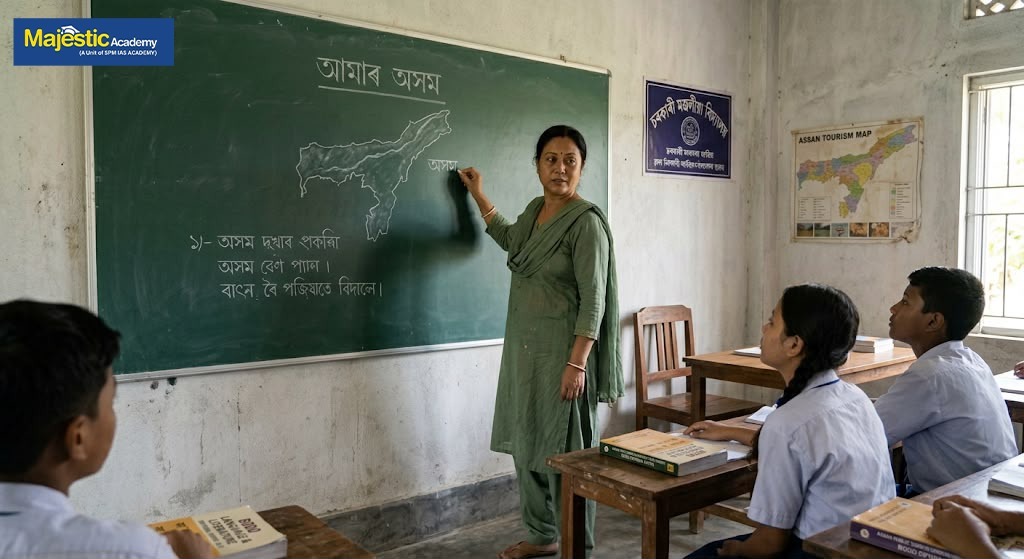
The TET exam, which is the Teacher Eligibility Test, was introduced under the Right to Education Act, 2009, with one core objective: ensuring that only candidates who meet a defined teaching standard enter the profession. Before TET, the screening mechanism for teacher recruitment was inconsistent across states. The RTE Act mandated a standardized eligibility test so that every candidate joining a government school as a teacher had demonstrated a baseline competency in pedagogy and subject knowledge.
The central idea behind the TET exam is straightforward. Knowing a subject well is not the same as knowing how to teach it to young learners. So the test is designed to assess both, how much you know and how well you are prepared to help children learn. For more details about exam eligibility, pattern, and preparation tips, check this CTET 2026 complete guide to eligibility, exam pattern and winning strategy. This guide helps candidates understand the CTET 2026 requirements and prepare effectively.
What Is the Quick Overview of the TET Exam?
Here is a quick review on the TET. Have a glance on it
| Detail | Information |
| Full Form | Teacher Eligibility Test |
| Conducting Body | CBSE for CTET; State Education Departments for State TETs |
| Application Mode | Online |
| Exam Mode | Offline in most states; some states use a computer-based test |
| Marking Scheme | 1 mark for each correct answer; No negative marking |
| Papers | Paper I (Classes 1–5) and Paper II (Classes 6–8) |
What Are the Different Types of TET Exams in India?
The TET runs at two levels in India, the central level and the state level, and each covers a distinct set of schools.
CTET — Central Teacher Eligibility Test: The Central Board of Secondary Education conducts the CTET. Clearing the CTET qualifies candidates to apply for teaching positions in schools run by or affiliated with the central government, including Kendriya Vidyalayas and Navodaya Vidyalayas.
State TETs — State Teacher Eligibility Tests: These are conducted by individual state education departments or state boards of education. Clearing the relevant state TET qualifies candidates for teaching roles in government schools within that particular state. For example, the Assam TET qualifies candidates for government school teaching roles in Assam, while the Maharashtra TET qualifies candidates in Maharashtra.
Since different states conduct their own TET exam cycles independently, the specific eligibility conditions, syllabus weightage, and schedule vary slightly across states. However, the overall structure, two papers, similar sections, no negative marking, remains consistent. Candidates planning to appear for the upcoming teacher eligibility tests should also stay updated with the latest exam notifications, application dates, eligibility requirements, and preparation guidelines. For detailed information about the upcoming CTET schedule and related updates, you can check the CTET September 2026 Notification.
Who Is Eligible to Appear for the TET Exam?
The TET exam eligibility varies based on which paper a candidate wants to appear for — Paper I for primary teaching or Paper II for upper primary teaching.
For Paper I — Primary Level (Classes 1 to 5):
Candidates must have completed Senior Secondary (Class 12) or its equivalent with at least 50% marks. Along with this, they must have passed or be appearing in the final year of either a 2-year Diploma in Elementary Education (D.El.Ed.) or a 4-year Bachelor of Elementary Education (B.El.Ed).
For Paper II — Upper Primary Level (Classes 6 to 8):
Candidates must have completed graduation from a recognized university with at least 50% marks. Along with this, they must have passed or be appearing in the final year of either a 2-year diploma in elementary education (D.El.Ed.) or a bachelor of education (B.Ed).
Age Limit: There is no age limit to appear for the TET exam. Any candidate who meets the educational qualification can apply regardless of age.
Can Final Year Students Apply? Yes. Candidates who are currently in the final year of their D.El.Ed, B.El.Ed, or B.Ed programmes, can appear for the TET exam while their course is still ongoing, provided their qualification is completed and certified before they are formally appointed to any teaching post.
What Is the TET Exam Pattern for Paper I?
Paper I of the TET is for candidates who want to teach primary level students from Class 1 to Class 5. The paper consists of 150 multiple-choice questions carrying 1 mark each, with a total duration of 2.5 hours. There is no negative marking.
| Section | Questions | Marks | Duration |
| Child Development and Pedagogy | 30 | 30 | 2.5 Hours |
| Language I (Compulsory) | 30 | 30 | |
| Language II (Compulsory) | 30 | 30 | |
| Mathematics | 30 | 30 | |
| Environmental Studies | 30 | 30 | |
| Total | 150 | 150 |
All five sections carry equal weight, which means no single section can be ignored. The Language I and Language II sections allow candidates to choose their preferred languages from the list prescribed by the conducting body. Candidates preparing for teaching eligibility exams can explore expert guidance, structured study plans, and professional support through Assam TET & CTET coaching at Majestic Academy to improve their exam preparation and confidence.
What Is the TET Exam Pattern for Paper II?
Paper II of the TET is for candidates who want to teach upper primary students from Class 6 to Class 8. It also consists of 150 questions for 150 marks in 2.5 hours, with no negative marking.
| Section | Questions | Marks | Duration |
| Child Development and Pedagogy | 30 | 30 | 2.5 Hours |
| Language I (Compulsory) | 30 | 30 | |
| Language II (Compulsory) | 30 | 30 | |
| Mathematics and Science OR Social Science | 60 | 60 | |
| Total | 150 | 150 |
The key difference in Paper II is the fourth section, which carries 60 questions and 60 marks. Candidates who want to teach mathematics and science choose the math/science option, while candidates who want to teach social science choose that stream. Both options carry the same marks. Since this section carries 40% of the total paper, the chosen subject stream significantly influences final scores.
A candidate can choose to appear for both Paper I and Paper II if they want to qualify for teaching at both the primary and upper primary levels.
What Is the TET Exam Syllabus — Paper I?
The TET paper I syllabus covers five sections, each testing a different dimension of a primary teacher’s readiness.
Child Development and Pedagogy: Development of the child across different stages, learning and pedagogy, concept of inclusive education, and understanding the specific needs of children with special requirements.
Language I: Language comprehension and the pedagogy of language development. The choice of language depends on the options prescribed by the conducting body.
Language II: Same structure as Language I, language comprehension and pedagogy, but in a different language.
Mathematics: Addition, subtraction, multiplication, division, measurement, weight, time, volume, numbers, data handling, and other foundational mathematical concepts appropriate for primary-level teaching.
Environmental Science (EVS): Family and Friends (covering relationships, work, play, animals, and plants), Food, Water, Shelter, Travel, and Things We Make and Do. This section connects academic content with real-world awareness at the primary level.
What Is the TET Syllabus — Paper II?
The TET paper II syllabus covers four main areas, with the fourth section divided into two streams.
Child Development and Pedagogy: Same coverage as Paper I, child development stages, learning pedagogy, inclusive education, and understanding special needs.
Language I: Language comprehension and pedagogy of language development.
Language II: Same structure as Language I in a second language.
Mathematics (for the Math/Science stream): Number system, geometry (2D and 3D), algebra, data handling, mensuration, symmetry, ratio and proportion, integers, and fractions, all at the upper primary level of complexity.
Science (for the Math/Science stream): Food, materials, people and ideas, moving things, natural resources, and natural phenomena at the upper primary level.
Social Science (for Social Science stream): History, Geography, Social and Political Life, and Pedagogical Issues relevant to teaching Social Studies at the upper primary level.
What Career Opportunities Does Clearing the TET Open?
Clearing the TET is the starting point for a government teaching career in India. After clearing CTET or the relevant State TET, candidates become eligible to apply for teacher recruitment drives conducted by government authorities. The specific opportunities depend on which paper was cleared.
After Clearing Paper I, candidates can apply for Primary Teacher (PRT) positions in government schools for Classes 1 to 5. In Assam, for example, the DEE Assam conducts LP teacher recruitment, for which the Assam TET Paper I qualification is mandatory.
After Clearing Paper II: Candidates can apply for Upper Primary Teacher (UPT) or Graduate Teacher (TGT) positions in government schools for Classes 6 to 8. The relevant subject stream, Math/Science or Social Science, determines the subject for which a candidate can teach.
After Clearing Both Papers: Candidates qualify for both primary and upper primary teaching recruitment, giving them the widest range of eligibility across all government teacher recruitment drives.
Salary and Job Stability: Government school teachers receive structured salary packages under state or central pay commissions. Beyond salary, the role carries permanent employment status, pension benefits in applicable states, medical facilities, annual leave, and significant social respect. With India’s large and continuously expanding school education system, demand for qualified teachers remains consistent year after year.
Private Schools: While private and unaided schools have their own recruitment criteria, TET qualification increasingly carries weight during private school hiring as well, since it signals a candidate’s demonstrated understanding of pedagogy and teaching standards.
What Is the Difference Between CTET and State TET?
Both examinations follow the TET framework, but they serve different employment systems.
| Feature | CTET | State TET |
| Conducting Body | CBSE | State Education Departments |
| Valid For | KV, NVS, Central Govt Schools | State Government Schools |
| Validity Period | Lifetime (after 2021 amendment) | Varies by state |
| Frequency | Usually twice a year | Varies by state |
| Language | English and Hindi | State language + others |
CTET qualification is lifetime valid following the government’s 2021 amendment, which removed the earlier 7-year validity restriction. State TETs have their own validity norms, some states also offer lifetime validity while others maintain a defined period.
Conclusion
The TET is the foundational qualification for every aspiring government school teacher in India. Whether you target CTET for central government school positions or the State TET for state government school roles, clearing the relevant paper opens a structured and stable teaching career at the primary or upper-primary level. The exam evaluates both subject knowledge and pedagogy, making it a genuine measure of teaching readiness rather than just academic knowledge. Since there is no age limit, no negative marking, and options to appear for both papers in the same cycle, the TET is accessible, fair, and well-structured for every candidate who genuinely wants to build a career in teaching. Start early, understand the syllabus paper by paper, practice consistently, and approach the exam with the awareness that it is not just a qualification gate, it is the first real test of your ability to contribute to a child’s education. For candidates looking to strengthen their preparation strategy, choosing the right learning platform can make a significant difference in understanding the syllabus, practising mock tests, and building confidence. Visit Majestic Academy for more information and guidance.
Frequently Asked Questions
Who conducts the TET ?
The TET is conducted at two levels. The Central Board of Secondary Education (CBSE) conducts the CTET, which covers teaching positions in central government schools. State-level TETs are conducted by individual state education departments or state boards of education, and qualifying for them makes candidates eligible for teaching roles in government schools within that specific state.
Who is eligible for the TET ?
Eligibility for the TET depends on the paper. For Paper I (Classes 1 to 5), candidates must have completed Class 12 with at least 50% marks along with a D.El.Ed or B.El.Ed qualification. For Paper II (Classes 6 to 8), candidates must be graduates with at least 50% marks and hold a D.El.Ed or B.Ed degree, or be appearing in the final year of these courses. There is no age limit for appearing in the TET exam.
What is the syllabus of the TET ?
The TET syllabus covers Child Development and Pedagogy, two Language papers, and subject-specific content. For Paper I, the subjects are Child Development and Pedagogy, Language I, Language II, Mathematics, and Environmental Studies. For Paper II, the subjects are Child Development and Pedagogy, Language I, Language II, and either Mathematics and Science or Social Science, depending on the teaching subject the candidate chooses.
Majestic Academy is a trusted coaching institute offering result-oriented SSC Coaching, Banking Coaching, and ADRE Coaching for competitive exam aspirants. Serving students across Guwahati and Assam, we provide structured preparation with expert faculty, updated study materials, and regular mock tests. Our specialized RRB Coaching in Guwahati helps railway exam candidates build strong fundamentals and gain exam confidence. We also offer focused TET Coaching in Guwahati for aspiring teachers with concept-based learning and exam-oriented guidance. At Majestic Academy, we are committed to quality education, clear mentoring, and consistent student success.